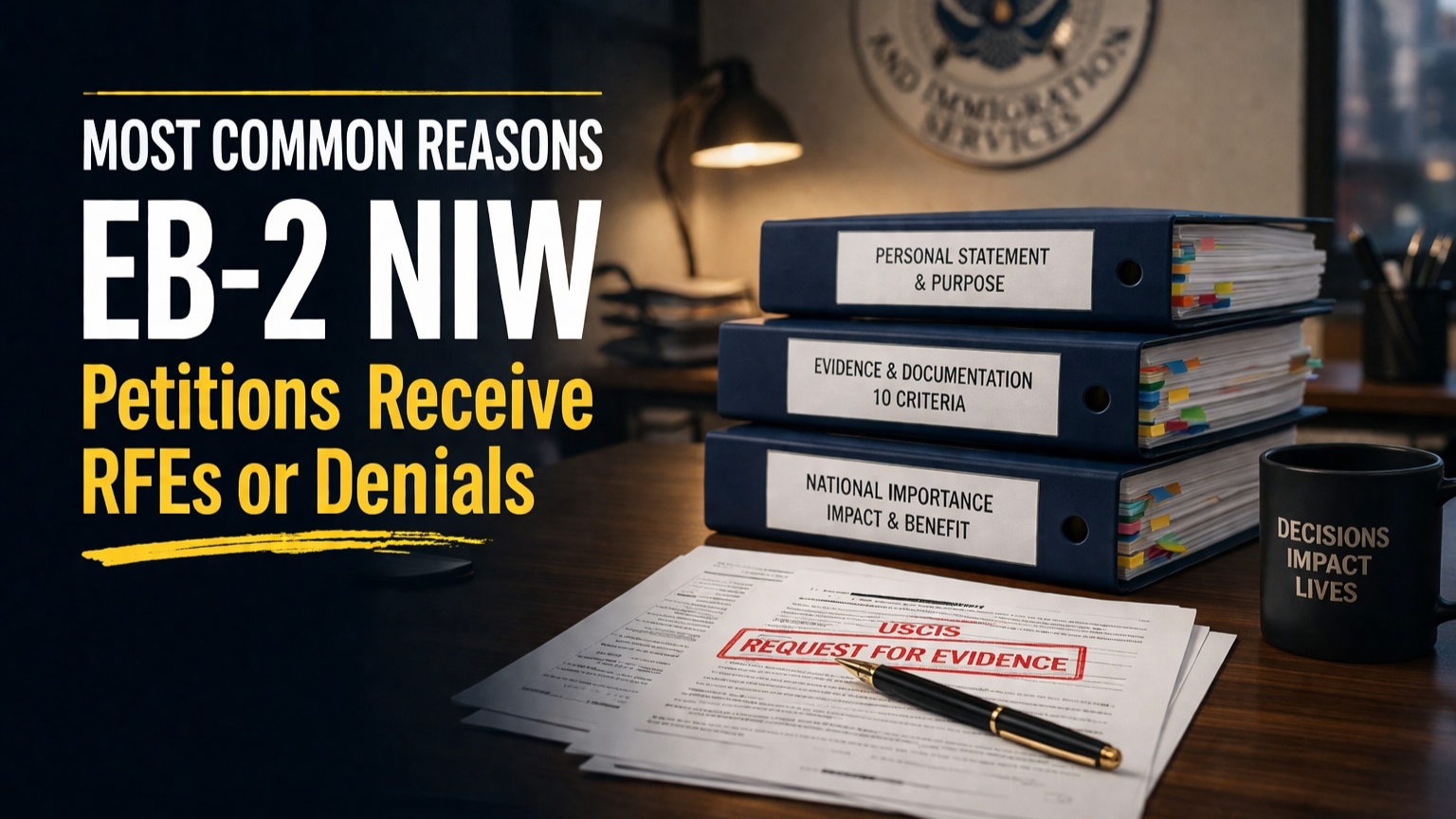
Understand exactly why USCIS issues RFEs for EB-2 NIW and EB-1A petitions. We break down evidentiary standards, the 10 criteria, and how to prove national importance without relying on fluff.
The Most Common Reasons EB-2 NIW Petitions Receive RFEs or Denials
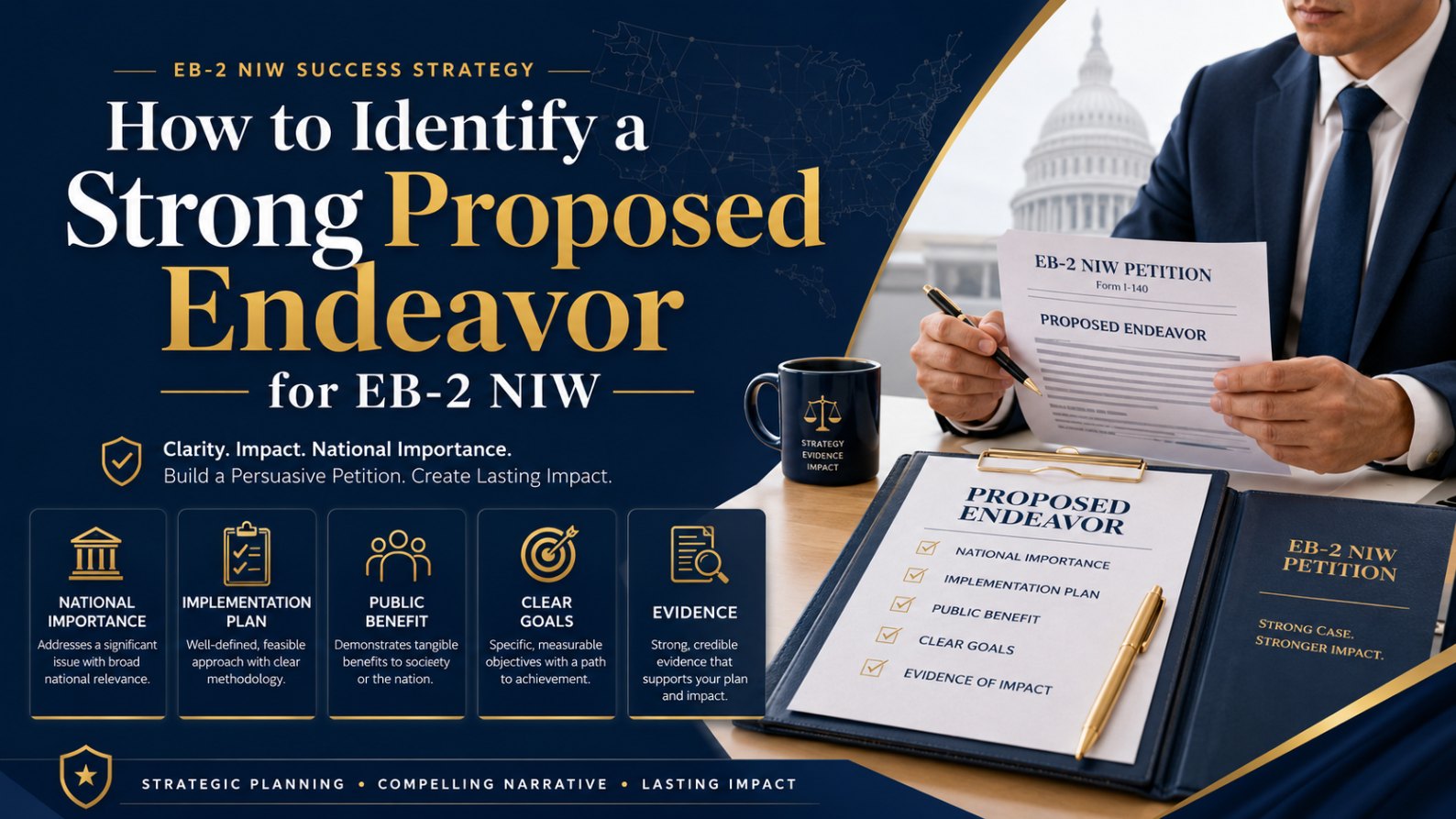
EB-2 NIW petitions fail in two distinct ways, and they're worth separating because the fixes are different. The first is a Dhanasar problem: the applicant hasn't proven that their proposed endeavor carries genuine national importance, only that they're good at their job. The second is a credibility problem: the evidence looks assembled for the petition rather than drawn from a real career. Both get you an RFE. Together, they get you a denial.
What makes NIW cases particularly frustrating to salvage after an RFE is that the Dhanasar framework doesn't give you a checklist. There's no "submit three of these ten things." The officer is making a judgment call about whether your work matters at a national scale — and if your petition gave them generic language and boilerplate letters instead of hard proof, that judgment call goes against you.
Why Superficial Evidence Triggers an RFE
The most common NIW petition mistake is confusing professional accomplishment with national importance. A strong career in supply chain engineering, computational biology, or financial infrastructure doesn't automatically mean your specific work has systemic impact beyond your employer. USCIS adjudicators know the difference, and they've seen enough petitions to spot the signals quickly.
Pay-to-play memberships are one of the fastest credibility killers. An officer pulling the bylaws of an organization and finding that membership requires a bachelor's degree and an annual fee will note that in the record — and then look harder at everything else in the petition.
Boilerplate recommendation letters are the other chronic problem. Five letters from colleagues using nearly identical phrasing to describe "significant contributions to the field" don't corroborate each other — they undercut each other. Adjudicators want letters from independent experts who have no professional obligation to be generous, who can explain specifically how the applicant's methodology or research is applied in their own work or organization. That's a different ask than "write a letter saying this person is excellent."
The friction point USCIS targets most directly is the gap between what the petition claims and what the evidence proves. A petition arguing that an applicant's logistics software optimized supply chains at a national scale, backed only by an employer letter confirming the software saved internal teams time, fails the national importance prong of Dhanasar. The claim is national. The proof is local. That discrepancy is exactly what generates the RFE.
What USCIS Actually Evaluates
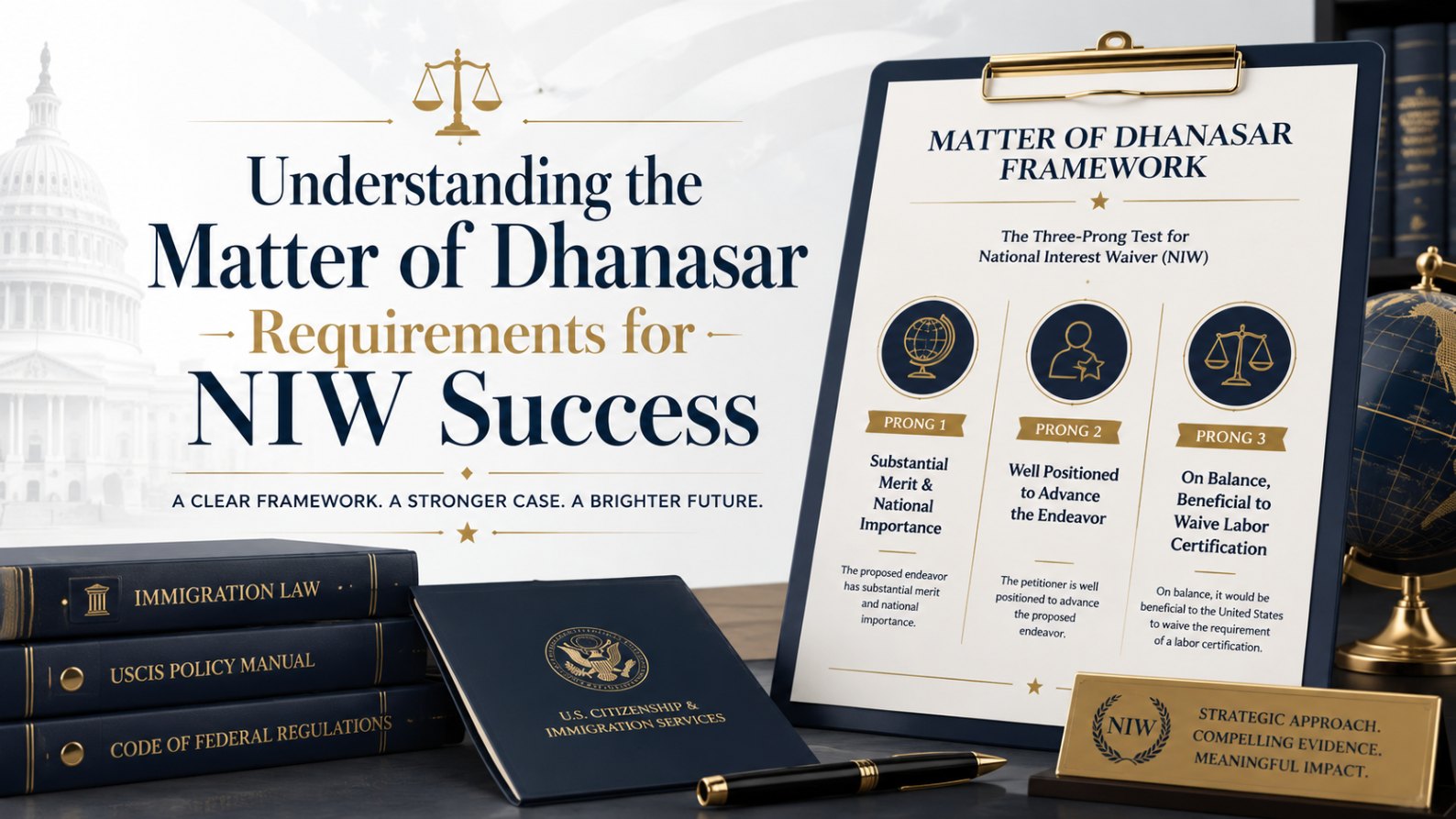
NIW petitions are assessed under the three-prong Dhanasar framework, established by the AAO in Matter of Dhanasar, 26 I&N Dec. 884 (AAO 2016). All three prongs must be satisfied: the proposed endeavor has substantial merit and national importance; the applicant is well-positioned to advance it; and, on balance, it would be beneficial to the United States to waive the job offer and labor certification requirements.
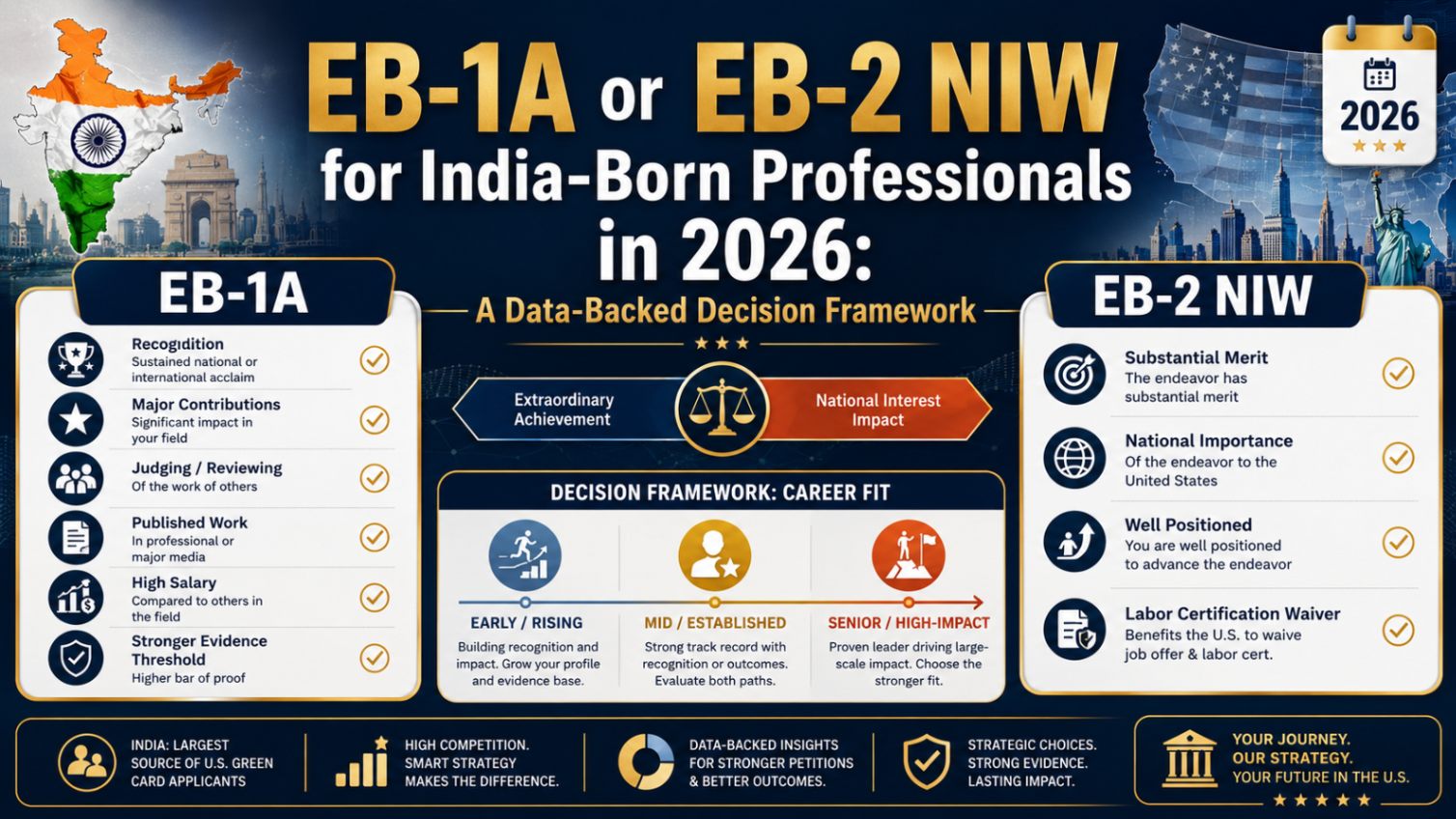
Many applicants also prepare parallel EB-1A profiles to avoid per-country backlogs, since EB-1A has no visa bulletin wait for most nationalities. Because the evidentiary standards overlap but aren't identical, understanding what USCIS actually requires for each EB-1A criterion helps clarify why generic evidence fails across both categories.
Awards. USCIS looks for nationally or internationally recognized prizes where the selection criteria are rigorous and independently verifiable. An internal company award or a student travel grant doesn't qualify. The officer evaluates who granted the award, how many competed for it, and what standards governed the selection. An IEEE Medal or a major national research prize clears the bar. An employee recognition certificate doesn't.
Memberships. The organization must require outstanding achievements for admission, evaluated by recognized experts — not a degree requirement and an annual fee. Election to the National Academy of Sciences or IEEE Fellowship status, both of which involve nomination, peer review, and a formal vote based on career impact, satisfy this. A standard professional association membership does not.
Published material. The coverage must be about the applicant and their specific work, in a publication that qualifies as major media or a recognized trade outlet. A press release the applicant paid to distribute, a brief company mention in an industry newsletter, or a profile in a publication with no independent editorial staff won't pass the officer's verification check. What works: an independently reported feature in MIT Technology Review or a recognized industry journal, where the reporter found the applicant through their work and conducted an actual interview.
Judging. Peer reviewing for academic journals satisfies this criterion when done right. Forty reviews completed in sixty days before filing triggers a credibility review and effectively poisons the criterion. A sustained record of reviewing for journals with meaningful impact factors — particularly when accompanied by a letter from an editor explaining why this person was specifically recruited — is what strong evidence looks like. Serving on federal grant review panels for agencies like NSF or NIH carries particular weight.
Original contributions. This is where NIW and EB-1A petitions most often succeed or fail. A published paper is an original contribution. It only becomes a contribution of major significance if independent researchers cite it to advance their own work, or if it demonstrably shifted clinical guidelines, industry standards, or regulatory frameworks. A patent only carries weight here if it's been licensed, commercialized, or implemented by independent entities. The patent filing date alone proves nothing about significance.
Scholarly authorship. USCIS checks the journal's standing and the applicant's position in the author list. First-authored publications in high-tier peer-reviewed journals carry the most weight. Co-authorship on a paper where the applicant's role is unclear, or publications on corporate blogs and open-access platforms with no editorial vetting, don't satisfy this criterion.
Exhibitions. This criterion applies primarily to artists and requires that the work was displayed at venues where selection is competitive and the institution carries recognized cultural standing. A local gallery show or an exhibition the applicant organized themselves doesn't qualify. A solo exhibition at a museum with a rigorous curatorial process does.
Leading or critical role. Job title isn't evidence. A Vice President title at an unknown company doesn't satisfy this. What does: an organizational chart showing where the applicant sat in the decision-making structure, paired with a letter from a C-suite executive that ties specific decisions the applicant made to measurable outcomes — revenue growth, a successful product launch, a funding round where investors cited the applicant's work directly.
High salary. Compensation is benchmarked against Department of Labor prevailing wage data for the applicant's specific job code and geographic market. A $150,000 salary looks different in rural Texas than in San Francisco, where the 90th percentile for a software architect may exceed $220,000. The comparison has to be accurate and externally sourced. W-2s or tax returns establish the baseline; BLS data or a reputable salary survey establishes the benchmark.
Commercial success in the performing arts. This criterion is narrow. It requires box office receipts, certified record sales, or documented streaming data demonstrating that consumer demand significantly exceeds the average for that industry segment. A platinum certification or documented sold-out international tours with major promoters meets the standard. Five hundred album sales on a personal website does not.
What Authentic Evidence Actually Looks Like
The difference between strong and weak evidence is usually visible within the first read.
For patents, weak evidence is a provisional application filed in the months before submission, with nothing showing anyone plans to use it. Strong evidence is a granted patent paired with executed licensing agreements, third-party implementation letters, and revenue data showing the technology generated commercial value for independent companies.
For judging, weak evidence is a history of outbound emails to low-tier open-access journals asking to volunteer as a reviewer, with all activity compressed into the pre-filing window. Strong evidence is a letter from an editor at a high-impact journal — Nature, IEEE Transactions, a top-tier field-specific publication — explaining that they recruited this person based on their published work, accompanied by review logs showing consistent participation over multiple years.
For critical role, weak evidence is a CEO letter describing the applicant as "instrumental to the team's success." Strong evidence is a cap table showing equity, media coverage of a specific product launch the applicant led, and internal analytics showing that a strategy or system they built increased user retention by a documented percentage that translated into measurable revenue.
For NIW specifically, the national importance prong requires evidence that extends beyond the employer. An applicant working on infectious disease modeling needs to show that public health agencies have implemented their frameworks, that their research appears in CDC guidance documents, or that peer-reviewed literature in the field cites their methodology as a reference standard. Employment verification letters don't establish national importance. External adoption does.
EB-1A vs. EB-2 NIW vs. O-1A — Choosing the Right Path
| Visa | Eligibility Standard | Key Evidence | Processing | Best Fit |
|---|---|---|---|---|
| EB-1A | Extraordinary ability — top fraction of the field | Major awards, heavy independent citations, documented industry-wide adoption | 15 business days (Premium Processing) | Researchers, founders, and technical leaders with verifiable acclaim well beyond their employer |
| EB-2 NIW | Exceptional ability plus Dhanasar national importance showing | Implementation letters, endeavor plan, proof of systemic impact | 45 business days (Premium Processing); subject to visa bulletin | Engineers, specialized researchers, and entrepreneurs whose work has documented national-scale application |
| O-1A | Extraordinary ability — nonimmigrant | Similar criteria to EB-1A, somewhat less strictly adjudicated in practice | 15 business days (Premium Processing) | Professionals who need U.S. work authorization quickly and have an employer or authorized agent sponsor |
The practical consideration for most applicants is timing and sponsorship. EB-1A allows self-petitioning and has no per-country visa bulletin backlog for most nationalities. NIW also allows self-petitioning but is subject to the visa bulletin for nationals from backlogged countries. O-1A requires a sponsor but processes quickly and is often the right first step for someone building toward a permanent visa.
Frequently Asked Questions
Does peer reviewing count toward EB-1A? Yes, under the judging criterion — but quality and pattern matter more than volume. Officers check the impact factor of the journals, how the applicant was selected, and whether the history looks organic or manufactured. An applicant with a five-year record of reviewing for top-tier journals, where the editors can explain why this person specifically was recruited, is in a fundamentally different position than someone who reviewed forty papers in eight weeks to fill a box before filing.
Can patents that aren't commercialized satisfy the original contributions criterion? No, not reliably. USCIS has been consistent that filing a patent proves novelty, not significance. The criterion requires evidence that the contribution actively influenced the field — through licensing, adoption by independent companies, citations in subsequent patent applications, or implementation in commercial products. A provisional patent filed weeks before submission, with no evidence of downstream use, is unlikely to survive final merits review.
What's the difference between EB-1A and O-1A? Both require extraordinary ability, but they serve different purposes. O-1A is a nonimmigrant classification requiring employer or agent sponsorship and granting temporary work authorization. EB-1A is permanent, allows self-petitioning, and leads directly to a green card. In practice, adjudicators apply stricter scrutiny to EB-1A because the consequences of approval are different. O-1A approval doesn't predict EB-1A approval, and attorneys who tell clients otherwise are setting up a difficult conversation later.
How many EB-1A criteria are required? Three of the ten regulatory criteria, or evidence of a single major internationally recognized award. Satisfying the minimum three is only the first analytical step. The officer then conducts a final merits determination on the full record. Three weak criteria — a pay-to-play membership, a low-circulation media mention, and a handful of predatory-journal peer reviews — technically satisfy the threshold but rarely survive the second step.
What most commonly drives EB-1A denials? The final merits determination is where most strong-seeming petitions collapse. Technically responsive evidence that lacks genuine prestige, letters of recommendation without independent corroboration, and pre-filing credential sprints that create suspicious timeline clustering are the recurring patterns. Adjudicators aren't just reviewing documents — they're evaluating whether the record reflects a career or a filing strategy.
Your Next Step
The most expensive NIW or EB-1A mistake is filing before the record is ready. A well-prepared petition that gets approved costs far less — in time, fees, and professional disruption — than a petition that gets an RFE, requires a lengthy response, and then faces heightened scrutiny on resubmission.
A VangaVault profile assessment reviews your CV and existing evidence to identify specifically where the gaps are and which visa category your current profile actually supports. You receive a written feasibility analysis and timeline estimate within 48 hours. Schedule a consultation to get that evaluation started.
Get Immigration Insights Delivered to Your Inbox
Practical guidance on EB-1A, EB-2 NIW, O-1A, and U.S. immigration — no spam, unsubscribe anytime.