
Defining your proposed endeavor is the most critical part of an EB-2 NIW case. We analyze the mechanics of national importance and how to avoid common RFE triggers.
How to Identify a Strong Proposed Endeavor for EB-2 NIW
The proposed endeavor is the part of an EB-2 NIW petition that most applicants underestimate. The assumption is that being highly qualified in an important field is enough — that a strong CV and a few expert letters will carry the "national importance" argument without much additional architecture. USCIS denials tell a different story. The most common failure mode in NIW petitions isn't a weak credentials record; it's a proposed endeavor that reads like a job description rather than a specific plan with documented consequences for the United States beyond the applicant's employer.
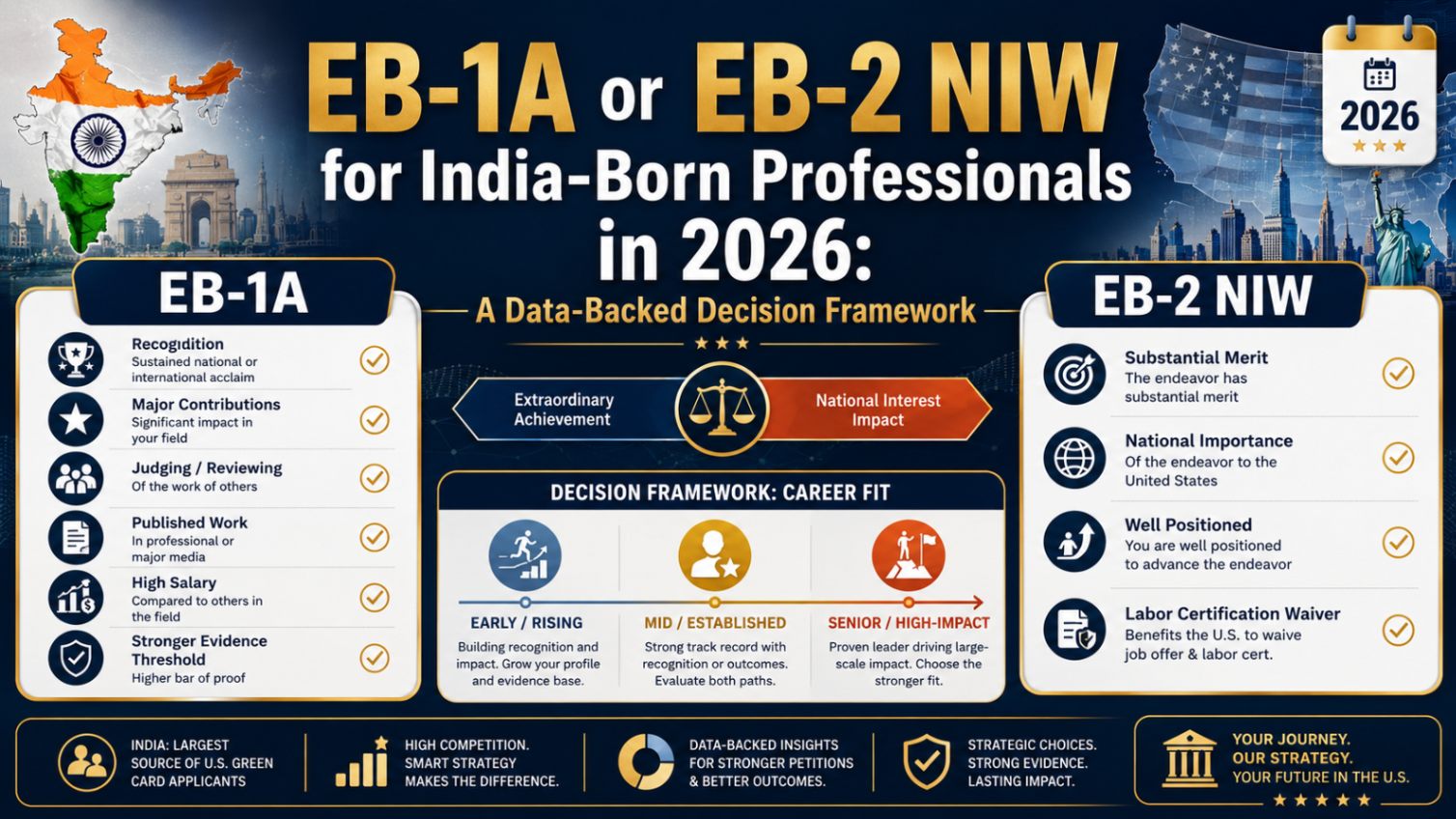
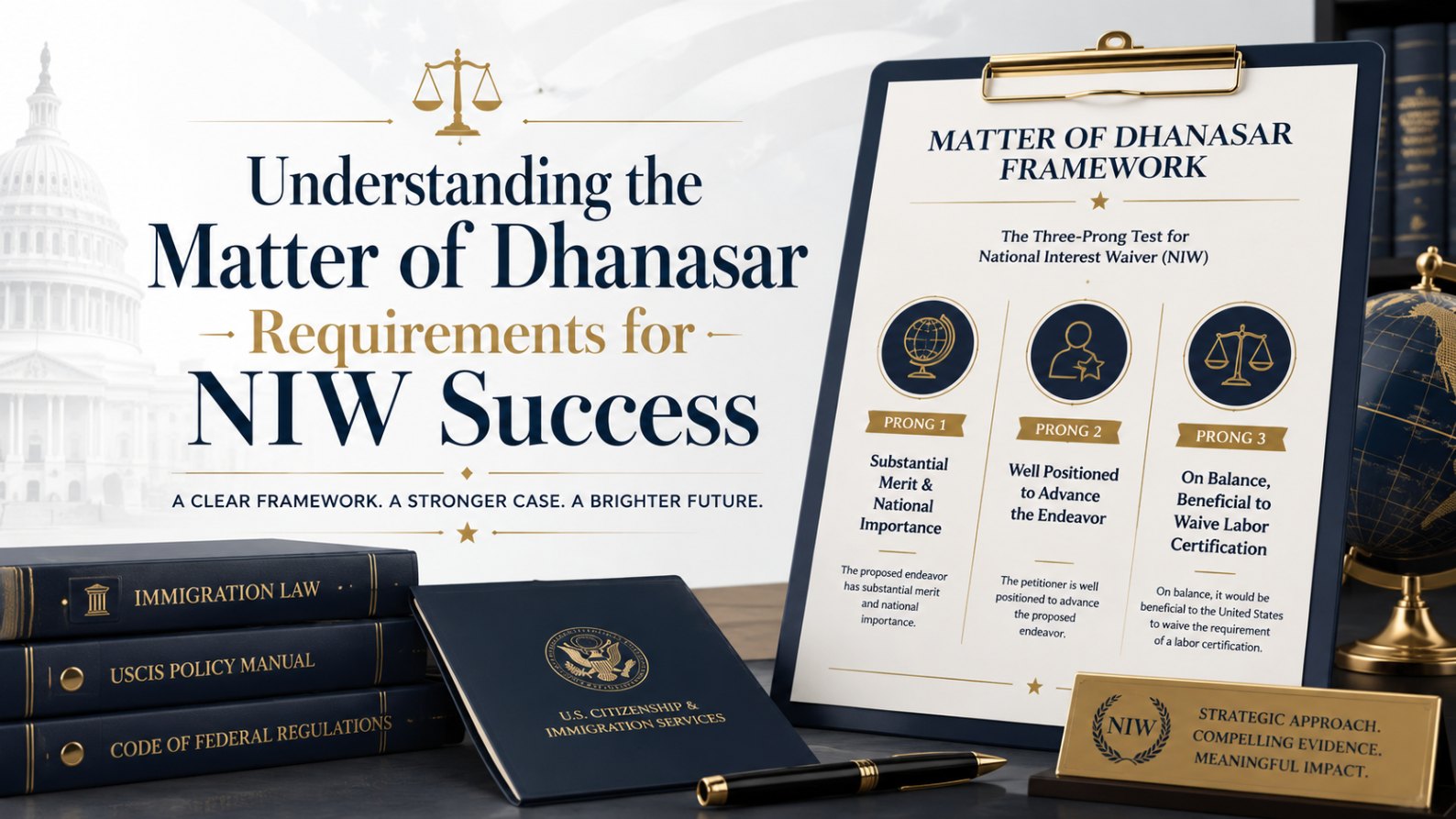
Under Matter of Dhanasar, 26 I&N Dec. 884 (AAO 2016), the three-prong framework for NIW adjudication asks: does the proposed endeavor have substantial merit and national importance? Is the applicant well-positioned to advance it? Would it be beneficial to the United States to waive the job offer and labor certification requirements? Each prong demands something specific, and the proposed endeavor is the thread that runs through all three.
Substantial Merit and National Importance: Why the Distinction Matters
Substantial merit is the easier of the two components in the first prong. USCIS has consistently found merit in endeavors spanning oncology research, clean energy development, cybersecurity, infrastructure engineering, and public health — fields where the connection to broader societal benefit is structurally built in. Most applicants in these areas clear the merit bar without difficulty.
National importance is where petitions stall. The critical error is conflating professional excellence with national impact. USCIS policy guidance is explicit that national importance is about the potential impact of the specific work, not the applicant's talent or the prestige of the field. A highly credentialed oncologist who plans to practice at a private clinic treating paying patients is doing work of genuine merit. It is not, without more, work of national importance in the NIW sense — because the benefit is confined to the patients treated and the employer's business, not the field or the country at large.
What changes the analysis is scope and ripple effect. An oncologist developing a screening protocol that, if validated, could be adopted across federally qualified health centers to improve early detection rates in underserved populations is describing a different endeavor. The impact mechanism extends beyond the immediate employment relationship to a problem that exists at a national scale.
The Two Dimensions of National Importance
Scale of impact. The question isn't whether the work is valuable — it's whether the value propagates outward from the applicant's direct employer or clients. A manufacturing process improvement that benefits one plant fails the standard. The same process improvement, designed as a replicable methodology that the U.S. automotive sector could adopt to reduce emissions across the industry, does not. The endeavor statement needs to articulate the mechanism by which the work produces benefits beyond its immediate context — what the field learns from it, what other practitioners can adopt from it, or what structural problem in the economy or public health it addresses.
Geographic scope with national implications. An endeavor can be geographically specific and still satisfy national importance, provided the petition connects it to a broader national problem. A clinician implementing a telehealth model in a specific medically underserved rural county is doing local work. If the petition frames that work as generating evidence for a replicable model applicable to the 60 million Americans in rural areas lacking adequate primary care access — and cites the HRSA definition of health professional shortage areas to ground that claim — the national importance argument becomes substantive rather than aspirational.
Comparing Weak and Strong Proposed Endeavors
| Industry | Weak Proposed Endeavor | Strong Proposed Endeavor | Impact Mechanism |
|---|---|---|---|
| Software Engineering | Senior developer building mobile applications for an employer | Developing open-source encryption protocols for securing sensitive data across U.S. financial institutions | Strengthens national financial infrastructure against systemic cyber threats |
| Healthcare | Cardiologist practicing at a private clinic | Leading an initiative to implement AI-driven early detection of cardiac failure in low-income populations | Reduces preventable mortality and long-term chronic disease costs at a national scale |
| Data Science | Analyzing consumer data to optimize marketing spend | Applying predictive modeling to optimize distribution logistics for essential medical supplies | Strengthens supply chain resilience during public health emergencies |
| Civil Engineering | Designing municipal bridges and roadways | Specializing in self-healing concrete applications to extend the service life of aging U.S. interstate infrastructure | Addresses the federal infrastructure maintenance backlog and reduces long-term capital expenditure |
What the Endeavor Statement Requires
The endeavor statement is the document that translates the proposed work into USCIS-legible evidence of national importance. It is not a resume section and it is not a cover letter. It functions more like a research proposal or a business plan for the specific work — laying out what will be done, why it matters to the United States, what resources and timeline are involved, and what the applicant brings to the execution that another practitioner wouldn't.
Adjudicators reviewing NIW petitions have generalist legal backgrounds. They are not specialists in oncology, cybersecurity, or infrastructure engineering. The endeavor statement must be written for that audience: specific enough to be credible, clear enough for a non-specialist to follow, and grounded in external evidence (federal agency reports, peer-reviewed literature, government priority documents) rather than the applicant's own assertions about the importance of their field.
Technical jargon that isn't explained is one of the more common ways a legitimate endeavor fails to communicate its national importance. An adjudicator who can't follow the argument within five minutes of reading will default to the position that national importance hasn't been established.
Letters of Support and Who Should Write Them
The letters that carry weight at this stage of the petition are not employment verification letters and are not letters from close professional colleagues. What the third prong of Dhanasar benefits from is independent corroboration that the proposed work addresses a real and significant national need.
A letter from a government official, a director at a federal agency, or a leader in a professional association who can attest — specifically, with reference to the applicant's proposed work — that the endeavor addresses a problem the field or country is actively trying to solve is substantially more useful than a letter from a supervisor describing the applicant's performance. The letter needs to name the endeavor, explain the problem it addresses, and describe why that problem warrants the national interest framing. Generic praise for the applicant's credentials doesn't accomplish this.
Aligning the Endeavor with Federal Priorities
The most direct way to establish national importance without extensive independent argument is to connect the proposed work to a documented federal priority. Executive Orders, White House Office of Science and Technology Policy (OSTP) reports, Department of Energy roadmaps, Department of Defense Critical and Emerging Technologies Lists, and HRSA shortage area designations are all sources that USCIS treats as authoritative external validation of national need.
If the proposed endeavor addresses a problem that the President has issued an Executive Order about, or that a major federal agency has identified as a priority in a publicly available strategic plan, the national importance prong is substantially easier to satisfy — because the applicant isn't asking USCIS to take their word for it. They're pointing to a government document that already establishes the national stakes.
The citation to these documents in the endeavor statement and cover letter should be specific: name the document, the agency, and the relevant section. A passing reference to "federal priorities in clean energy" carries less weight than a citation to the Department of Energy's long-duration energy storage initiative and a description of how the proposed work fits within it.
The Third Prong: Why the Waiver Argument Must Be Made Explicitly
Many petitions present a compelling endeavor and a qualified applicant and then treat the third prong as self-evident. It isn't. USCIS requires an affirmative argument for why requiring a job offer and labor certification would work against U.S. interests — not just why the applicant and the work are valuable.
The practical framing that works most consistently: either the work is urgent in a way that the labor certification timeline would materially harm, or the work doesn't fit the structure that labor certification assumes. Research funded by a federal grant illustrates the second case well. The "employer" is a university, the beneficiary is the public, and the specificity of the research program — often tied to a particular methodology the applicant has developed — means that the labor market test underlying labor certification (can a qualified U.S. worker be found for this position?) doesn't map cleanly onto the actual work being done.
Entrepreneurs and self-employed practitioners make the third prong argument differently: if there is no employer to file a labor certification on behalf of, requiring one is structurally impossible, and the work's benefit to the U.S. economy — through job creation, technology introduction, or market development — provides the balance-of-interests justification for the waiver.
Common Failures in Proposed Endeavor Construction
Overly broad scope. "To improve U.S. economic competitiveness" or "to advance the field of machine learning" are not proposed endeavors — they are aspirations. USCIS treats these as speculative and issues RFEs asking the applicant to describe the specific project, timeline, and expected outcomes. The endeavor needs to be narrow enough to be concrete and broad enough in its impact mechanism to reach national importance.
Inconsistency between past record and future plan. An endeavor built around a specific technology the applicant developed, where that technology hasn't been cited or implemented by anyone else in three years, undermines the second prong — the applicant's positioning to advance the work. USCIS looks for evidence that the past record creates a credible foundation for the future plan. If the proposed work has no visible connection to anything the applicant has done before, or if prior work in the relevant area has attracted no external engagement, the petition becomes speculative.
Overreliance on field merit. Establishing that oncology, clean energy, or national security are important fields is not the same as establishing that the specific proposed endeavor has national importance. Officers will acknowledge field merit readily and then find that the specific project lacks the impact scope the national importance standard requires.
Frequently Asked Questions
Can the proposed endeavor relate to the current job? Yes, but it must be framed as a specific project with documented national impact — not a list of current job responsibilities. If the current employer's product is used by millions of Americans, that context can support the national importance argument, but the endeavor statement still needs to articulate the specific work and its impact mechanism, not just the employer's market presence.
Does the endeavor have to succeed to qualify? No. USCIS policy under Dhanasar requires only that the endeavor be well-positioned for success — that the groundwork exists to make the plan credible. Secured funding, formed partnerships, published preliminary findings, or existing contracts with implementing organizations are the types of evidence that establish this. A speculative plan with no supporting documentation of feasibility is the most consistent basis for an RFE on the second prong.
Can a self-employed individual or entrepreneur file NIW? Yes, and entrepreneurs often present some of the strongest NIW cases because the proposed work is inherently independent of a single employer's interests. The endeavor statement for a self-employed applicant should describe the specific service or product being developed, the U.S. client base or market it addresses, and the economic impact — job creation, technology introduction, or infrastructure development. A detailed business plan with realistic projections typically anchors these petitions.
What happens if the endeavor changes after filing? Eligibility for EB-2 NIW is determined based on the facts at the time of filing the I-140. Minor professional evolution within the same field and endeavor scope is generally acceptable. A significant pivot — from research to unrelated commercial work, or from the specific technology described in the petition to an entirely different domain — can provide grounds for denial or revocation, as it raises the question of whether the work that justified the waiver will actually be pursued.
A VangaVault profile assessment reviews the proposed endeavor against current Dhanasar adjudication trends, identifies the specific evidentiary gaps in the national importance and positioning prongs, and delivers a written strategy report within 48 hours. Start your assessment here.
Get Immigration Insights Delivered to Your Inbox
Practical guidance on EB-1A, EB-2 NIW, O-1A, and U.S. immigration — no spam, unsubscribe anytime.