Petitions fail when adjudicators cannot see the concrete U.S. benefit of your work. Learn how to stress-test your waiver logic and present authentic, verifiable evidence.
EB-2 NIW and EB-1A: How to Stress-Test Your Immigration Case for Approval
An impressive resume doesn't guarantee an EB-2 NIW or EB-1A approval. Cases are rarely denied because the applicant lacks merit — they're denied because the adjudicating officer couldn't find a compelling reason, grounded in specific documented evidence, why the waiver is justified for this particular work at this particular moment.
A petition packed with credentials, thoughtful letters, and a long project history often reads more like a professional biography than an immigration argument. The distinction matters. Biographical evidence describes what happened. Immigration evidence explains why it matters nationally, proves that independent parties relied on it, and makes the waiver feel like the obvious conclusion rather than a judgment call the officer has to make on incomplete information.
The Problem With Counting Achievements Instead of Proving National Interest
The single most common NIW petition mistake is treating the filing like a job application. Applicants compile every project they've touched, every publication they've contributed to, every presentation they've given — operating on the assumption that volume creates persuasion. It doesn't. A disorganized evidence dump shifts the analytical burden onto the officer, who is now responsible for figuring out which accomplishments actually matter and why the waiver is warranted. Officers don't do that work. They issue RFEs or denials.
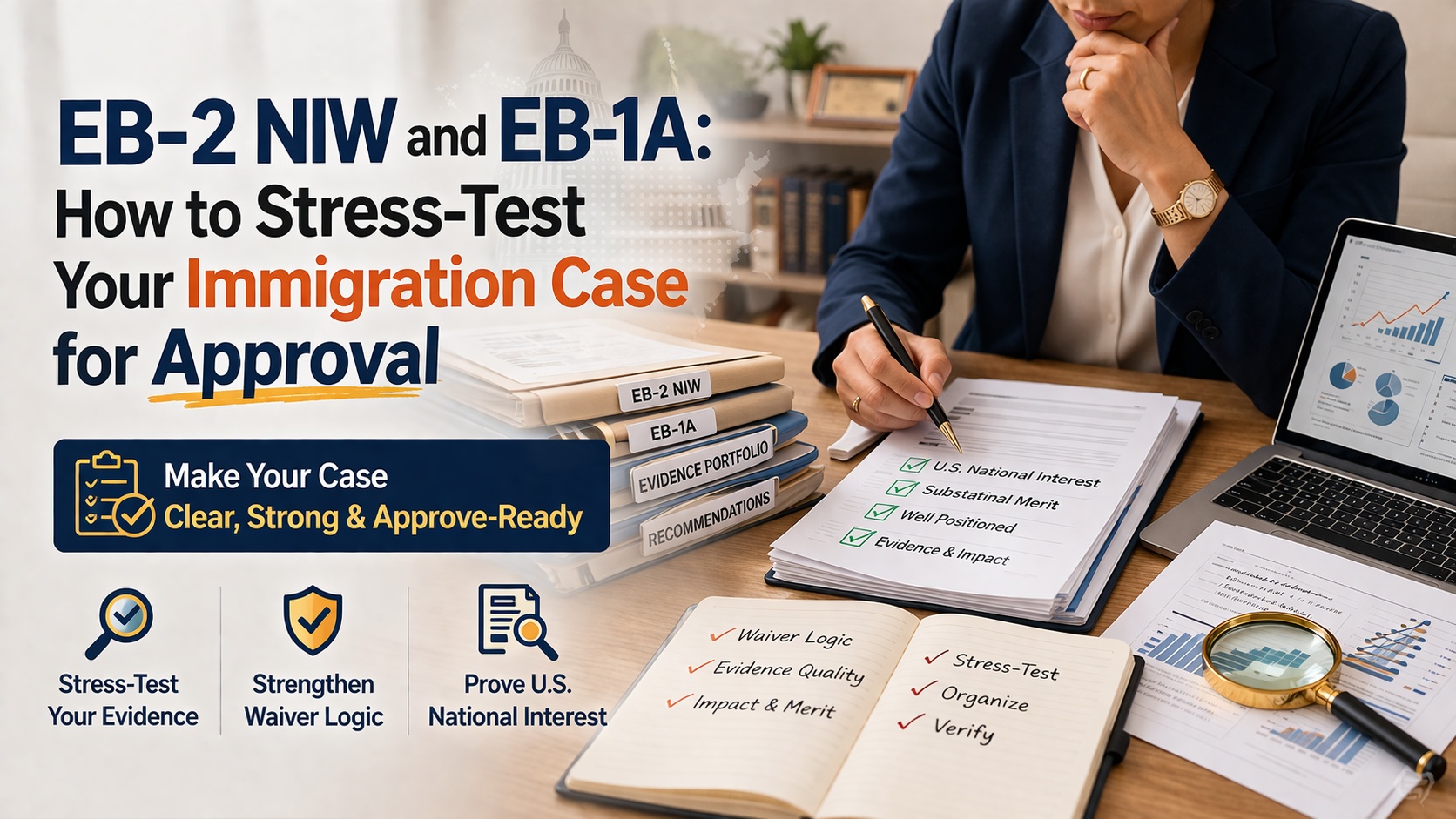
Stress-testing a petition means examining the waiver logic before filing, not after receiving the RFE.
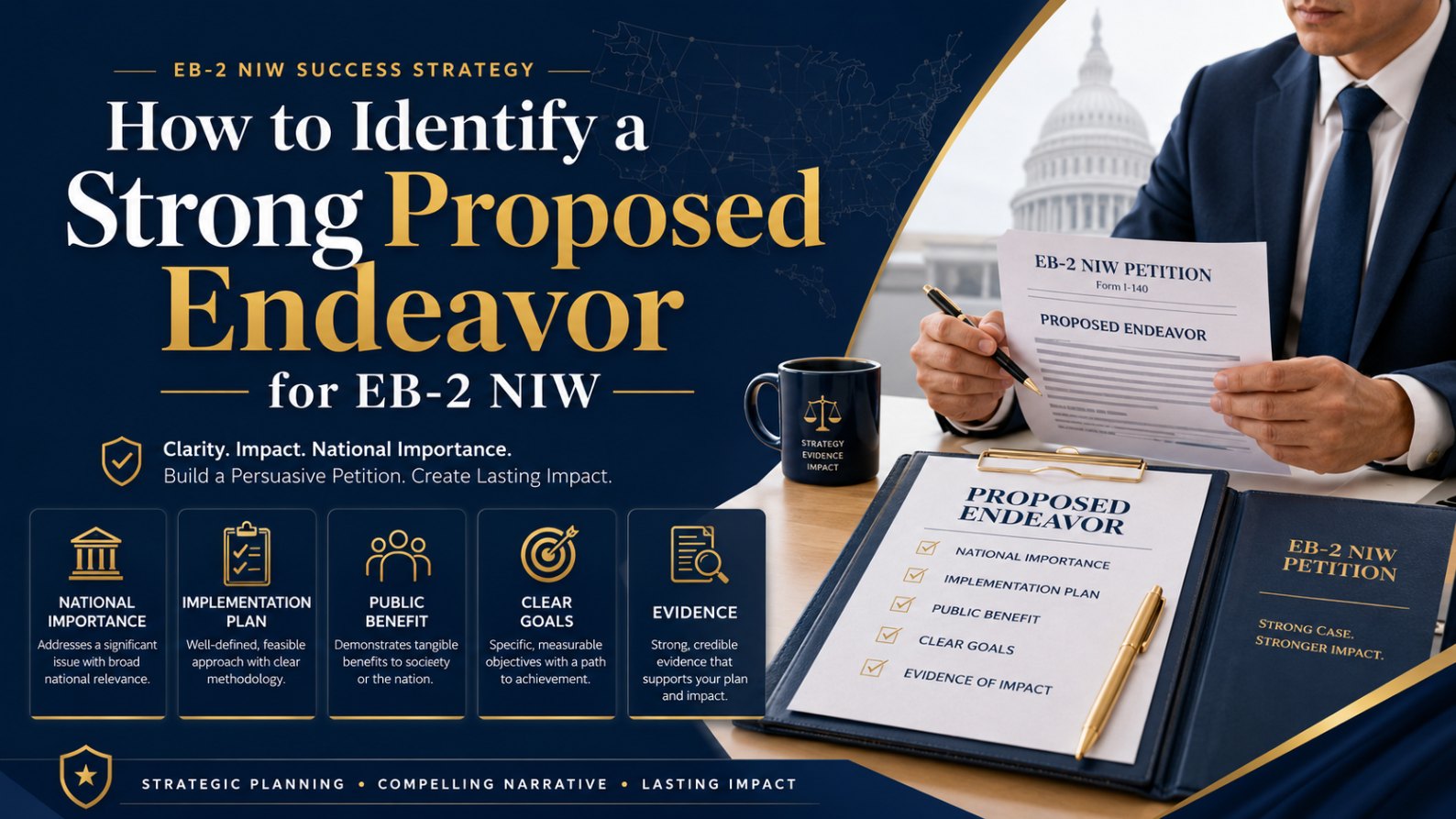
The first test is endeavor framing. An endeavor described as "advancing artificial intelligence applications" is aspirational and difficult to evaluate concretely. An endeavor framed as "deploying machine learning models to reduce false-positive contamination alerts in municipal water supply monitoring systems" is operational, measurable, and tied to an identifiable national interest. The difference isn't just rhetorical — it determines whether the officer has a framework for evaluating the evidence or has to construct one themselves.
The second test is independent pull. The record needs to show that external parties — organizations, institutions, other researchers, companies — have adopted, implemented, or relied on the applicant's work without being directed to do so by the applicant. Repeat engagements, downstream citations, licensing by unaffiliated entities, or implementation records from independent organizations all demonstrate this. A record showing a sudden spike of peer reviews and media placements in the sixty days before filing doesn't show independent pull — it shows petition preparation, which is precisely what adjudicators are trained to identify.
The third test is the through-line between past work and future impact. NIW petitions that rely primarily on what the applicant plans to accomplish, rather than what their existing record demonstrates they've already been able to do, are structurally weak. Future impact should read as the natural continuation of documented past results, not as a separate argument the petition is asking the officer to take on faith.
What USCIS Actually Evaluates
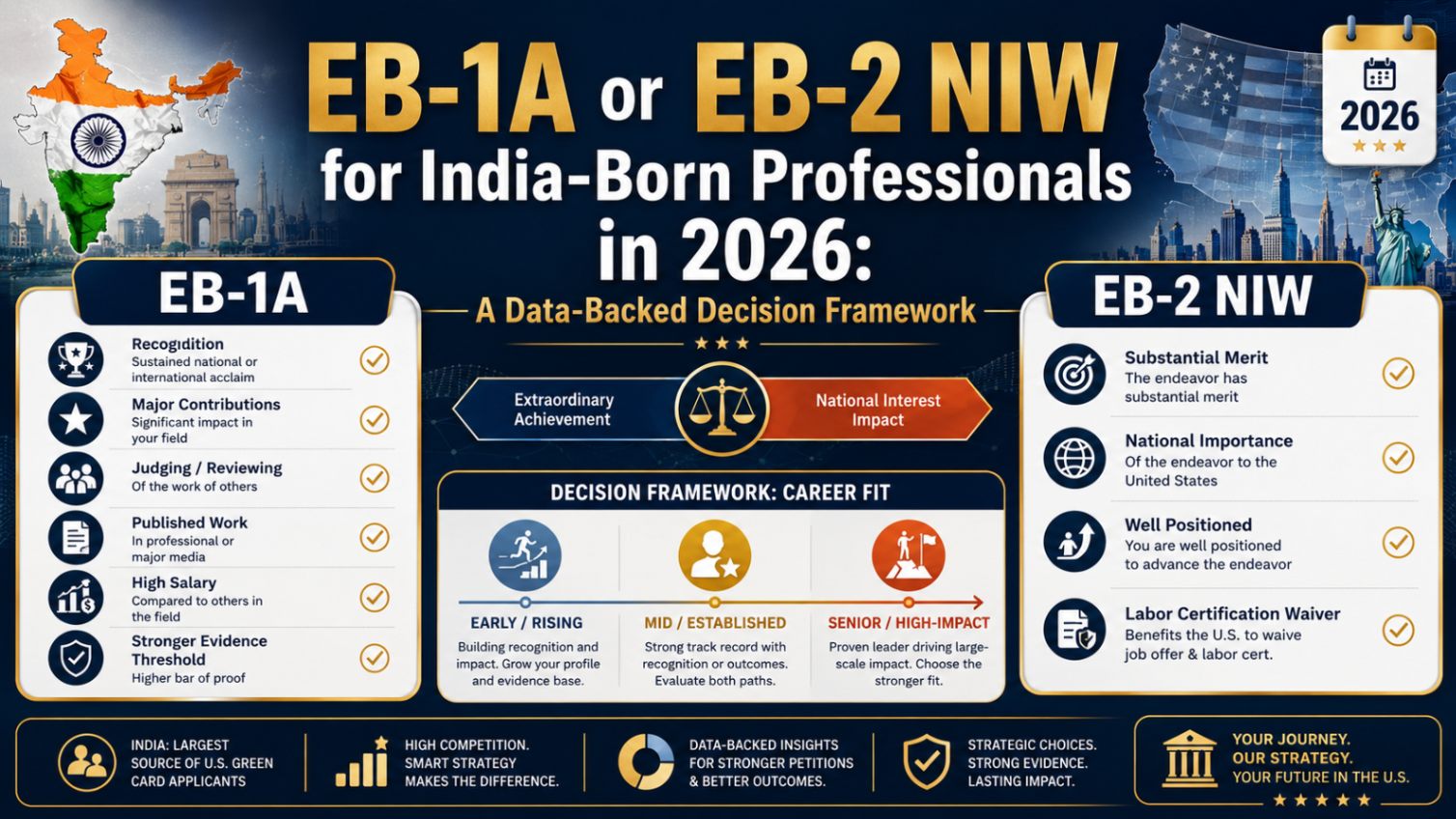
Many NIW applicants simultaneously assess their profiles against EB-1A criteria to determine whether a stronger category is available — and because EB-1A carries no per-country visa bulletin backlog for most nationalities, the comparison often has strategic significance. Understanding what adjudicators actually require for each criterion clarifies why generic evidence fails across both categories.
Awards. Officers evaluate the judging criteria, the geographic scope of the competition, and the competitive field. An academic travel grant, a student fellowship, or an internal employee recognition certificate doesn't qualify. The award requires national or international recognition — meaning independent verification that the selection process is rigorous and the recognition extends beyond the applicant's immediate institution or employer.
Memberships. The association must require outstanding achievements for admission, evaluated by recognized experts. Annual dues and a relevant degree don't satisfy this. The bylaws need to show that a panel of experts reviews and votes on admission based on substantive career contributions. IEEE Fellow status — which involves a formal nomination process, peer evaluation, and a vote by the IEEE Board of Directors — is the kind of membership that satisfies this criterion. A standard professional society subscription is not.
Published material. Coverage must be primarily about the applicant and their specific work, in a publication with verifiable independent circulation and editorial standards. Officers check circulation data using third-party tools. An article profiling the applicant's employer that mentions their name once won't satisfy the criterion. Sponsored content and paid press release distributions are identified and excluded. What works is independently reported coverage in a recognized trade publication or major media outlet, where the journalist found the story through the applicant's work rather than through a PR pitch the applicant paid for.
Judging. Serving on an editorial board is a starting point. The evidence needs to confirm that reviews were actually completed — actual review submissions, editorial correspondence requesting the applicant's specific expertise, and a timeline that reflects organic engagement over time rather than a concentrated pre-filing sprint. Forty reviews in sixty days isn't a judging record; it's a red flag that triggers a credibility review of the entire petition.
Original contributions. This criterion requires that the contribution had major significance to the field — not just that it was technically original. Letters from colleagues attesting to the applicant's skill carry minimal weight without documentary evidence that independent organizations have actually implemented the methodology or technology. The relevant proof is external: signed licensing agreements, implementation records from companies that aren't the applicant's employer, citations by independent researchers building directly on the work, or regulatory or clinical guidance that adopted the applicant's framework.
Scholarly articles. Officers check the journal's peer-review process, the applicant's authorship position, and the citation record in databases like Google Scholar or Web of Science. First-authored publications in high-tier peer-reviewed journals with consistent independent citations carry real weight. Self-published work, corporate blog posts, and publications in journals with no meaningful peer review process don't.
Exhibitions. This criterion applies primarily to artists and requires display of work at venues with a recognized reputation for selective, competitive curation. A local gallery or an exhibition the applicant organized isn't sufficient. A solo show at an institution with a documented curatorial process, or juried inclusion in a major professional showcase, meets the standard.
Leading or critical role. Title isn't evidence. A Vice President designation at a company with no distinguished reputation doesn't satisfy this. Strong evidence ties the applicant's specific decisions to measurable organizational outcomes: revenue generated by a product they launched, a market expansion they directed, a funding round where investor materials explicitly credited their work. Organizational charts establish the structural context; letters from executives provide the narrative; financial or operational data provides independent corroboration.
High salary. Compensation needs to be benchmarked against externally sourced data — Bureau of Labor Statistics prevailing wage figures or reputable compensation surveys — for the applicant's specific job title and geographic market. The comparison has to be apples-to-apples. Equity holdings count if they're supported by independent financial documentation showing actual value. A W-2 alone doesn't establish anything until it's compared against the right benchmark for the right market.
Commercial success in the performing arts. This criterion requires objective financial documentation: box office receipts, certified record sales, or platform-verified streaming data demonstrating that commercial performance significantly exceeds the average for that category. It applies narrowly to performing artists. A platinum certification or documented international tour revenue from major promoters meets the standard. Self-released music with modest independent sales does not.
What Authentic Evidence Actually Looks Like
The operational difference between evidence that survives USCIS scrutiny and evidence that doesn't usually comes down to whether independent third parties created it or whether the applicant did.
Original contributions. Weak evidence is a recommendation letter from a former manager describing a software algorithm as "highly efficient and innovative." Strong evidence is GitHub download logs showing adoption by external developers, executed licensing agreements with third-party companies, and system architecture documentation from those companies confirming integration of the specific algorithm into live commercial products. The first evidence tells the officer what to think. The second shows the officer what happened and lets them draw the conclusion themselves.
Judging. Weak evidence is a list of review completions for low-impact journals, concentrated in the months before filing, initiated through the applicant's own outreach to editors. Strong evidence is a multi-year review record for journals with meaningful impact factors in the field, accompanied by correspondence from senior editors explaining why this person was specifically recruited — ideally including instances where the applicant was asked to resolve conflicting peer feedback, which reflects genuine reliance on their judgment.
Leading or critical role. Weak evidence is an employment verification letter listing job title, reporting structure, and daily responsibilities. Strong evidence includes board meeting minutes or executive communications that cite the applicant's project by name, internal performance documentation tying specific decisions to measurable outcomes, and financial records connecting a product or market initiative the applicant led to a documented percentage increase in revenue or market position.
Published material. Weak evidence is a press release the applicant paid to distribute through a wire service. Strong evidence is an independently reported feature in a recognized industry publication — written by a journalist who found the story through the applicant's work, containing quotes from independent experts in the field, and accompanied by verifiable circulation statistics that confirm the publication qualifies as major media.
EB-1A vs. EB-2 NIW vs. O-1A — Choosing the Right Path
| Visa | Eligibility Standard | Key Evidence | Processing | Best Fit |
|---|---|---|---|---|
| EB-1A | Extraordinary ability — sustained national or international acclaim | Major awards, independent citation record, significant original contributions with documented external adoption | 15 business days (Premium Processing) | Established experts and founders with verifiable recognition extending well beyond their employer |
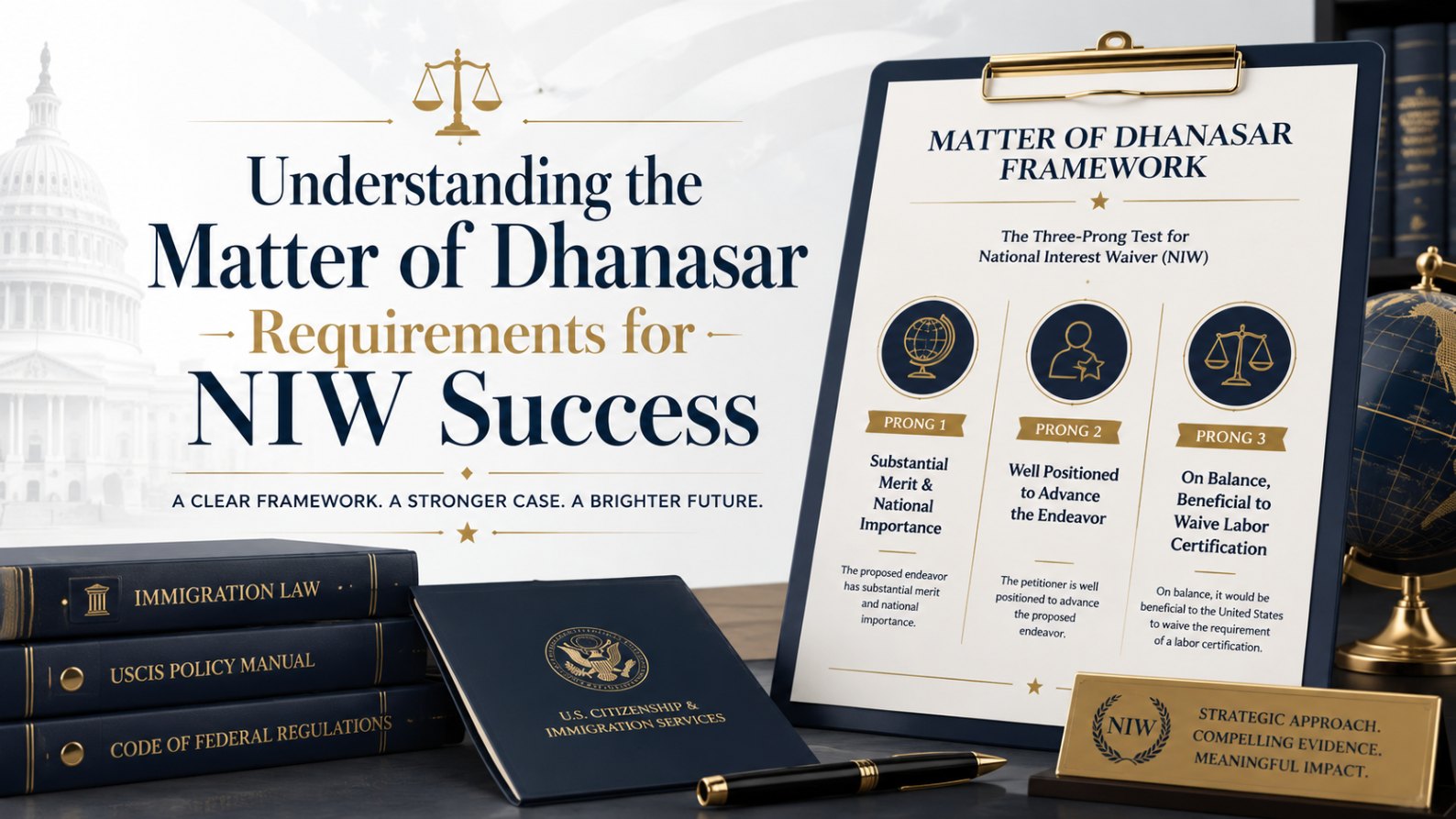
| EB-2 NIW | Advanced degree or exceptional ability, plus Dhanasar national interest showing | Concrete endeavor framing, independent pull documentation, implementation records from external organizations | 45 business days (Premium Processing); subject to visa bulletin | Professionals executing specific work with clear, measurable national benefit and a track record of external adoption |
| O-1A | Extraordinary ability — nonimmigrant | Similar evidentiary criteria to EB-1A, somewhat less strictly adjudicated | 15 business days (Premium Processing) | Professionals who need U.S. work authorization quickly while building toward a permanent visa |
Frequently Asked Questions
Does peer reviewing count toward EB-1A? Yes, under the judging criterion — but the evidence needs to confirm that the reviews were actually completed. That means invitation correspondence, submitted evaluations, and editorial confirmation. The journals must be recognized within the field, the timeline needs to reflect sustained engagement rather than a pre-filing spike, and the strongest cases include editorial correspondence showing the applicant was specifically requested for their expertise.
Can uncommercialized patents satisfy the original contributions criterion? Filing a patent establishes novelty. It doesn't establish major significance. To use a patent as EB-1A evidence, there needs to be proof of active use — licensing agreements, implementation by independent companies, or documentation showing the patent influenced subsequent commercial or technical development in the field. A dormant provisional patent carries minimal weight.
What's the difference between EB-1A and O-1A? O-1A is a nonimmigrant classification requiring employer or agent sponsorship, granting temporary work authorization. EB-1A is permanent, allows self-petitioning, and leads to a green card. Both use similar evidentiary criteria, but adjudicators apply meaningfully stricter scrutiny to the permanent visa. An O-1A approval doesn't predict EB-1A approval. Many professionals use the O-1A to work in the U.S. while continuing to build the record that will eventually support the stronger filing.
How many criteria are required for EB-1A? Three of the ten regulatory criteria, or a single major internationally recognized award — a Nobel Prize, Fields Medal, or Olympic Medal. Satisfying the minimum three criteria passes the first analytical step. The officer then conducts a final merits determination on the full record, asking whether the totality of the evidence demonstrates sustained national or international acclaim. Three technically satisfied but weak criteria frequently don't survive that review.
What most commonly drives EB-1A and NIW denials? For NIW, the most common failure point is an endeavor description too vague to evaluate concretely, combined with future-impact arguments that aren't grounded in documented past performance. For EB-1A, petitions most often fail the final merits determination because evidence technically satisfies basic criteria thresholds but lacks the independent external validation that distinguishes genuine acclaim from manufactured credentials. In both categories, relying on volume rather than quality of evidence is the pattern that consistently produces RFEs and denials.
Assessing Your Next Steps
The most useful thing before filing is an honest evaluation of where the current record actually stands — not against a theoretical checklist, but against how USCIS adjudicators have been assessing cases with similar evidence profiles.
During a VangaVault profile assessment, we evaluate your CV, publication record, and proposed endeavor framing, and identify the specific gaps between your current evidence and what the filing actually requires. You receive a written diagnostic within three business days indicating which category your record currently supports and what would need to change before filing makes strategic sense. Request an assessment to get started.
Get Immigration Insights Delivered to Your Inbox
Practical guidance on EB-1A, EB-2 NIW, O-1A, and U.S. immigration — no spam, unsubscribe anytime.