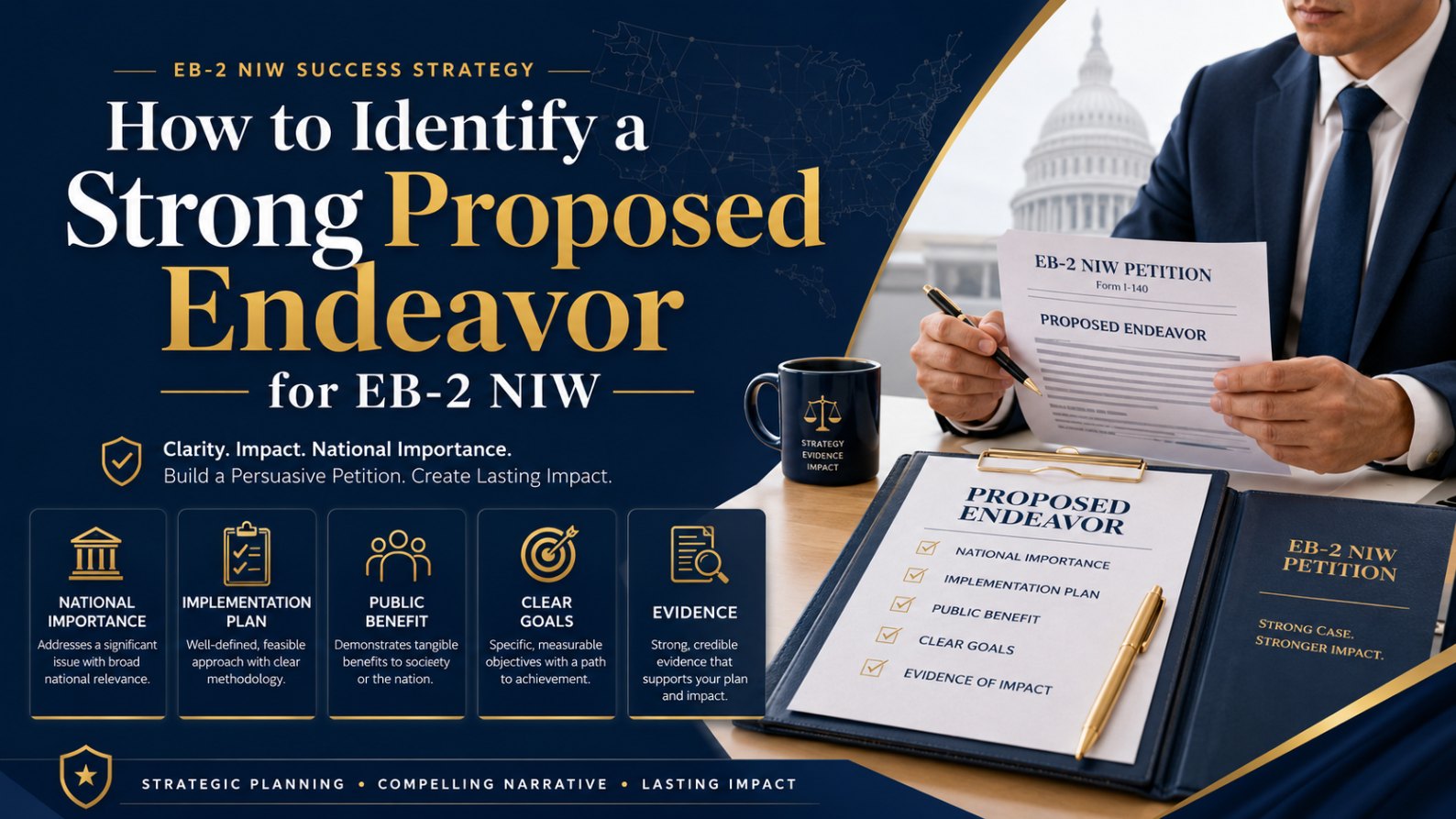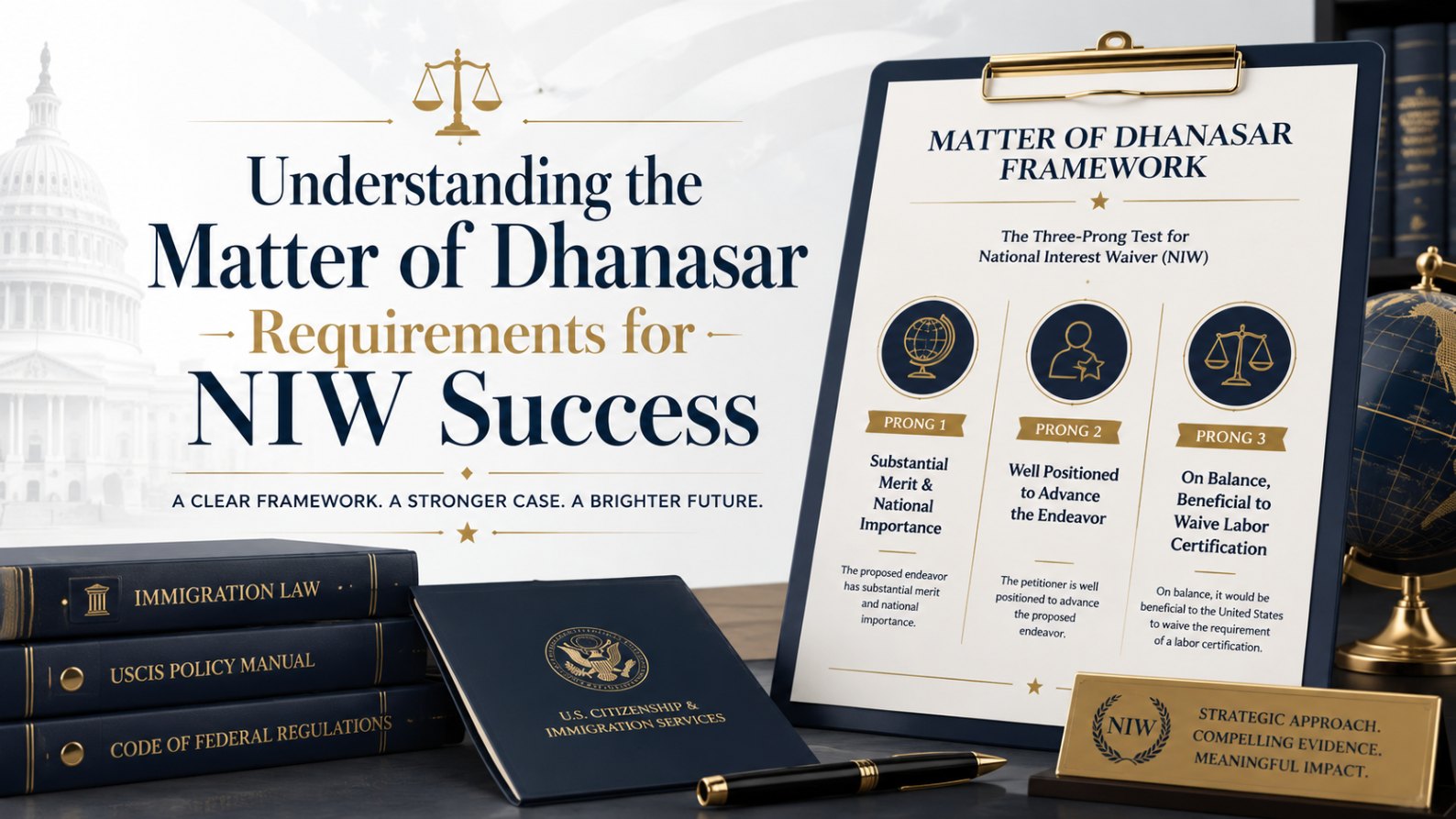
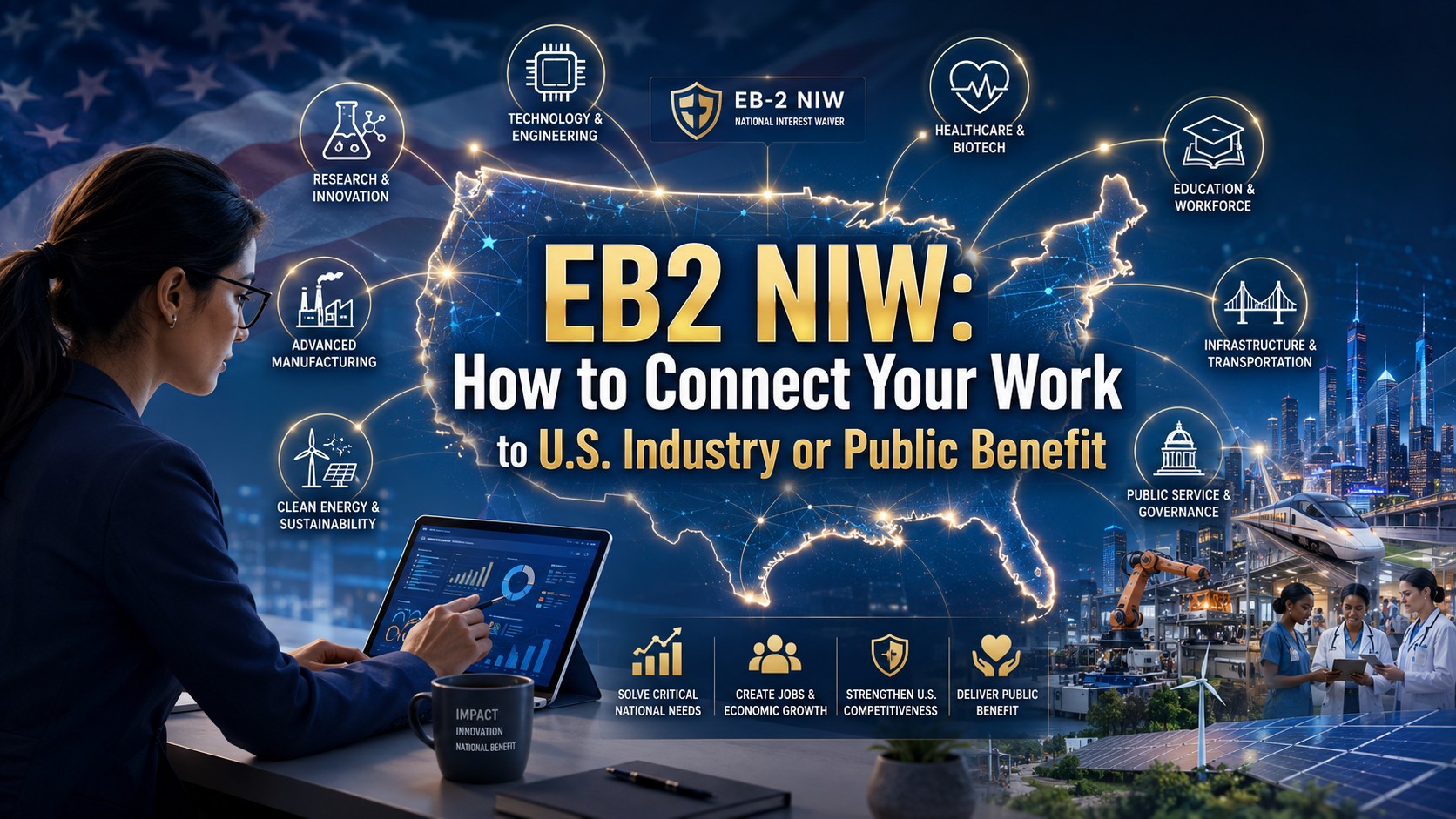
A successful EB2 NIW petition requires proving your work has national importance. This guide explains how to link your professional endeavor to U.S. strategic interests.
EB-2 NIW: How to Connect Your Work to U.S. Industry or Public Benefit
The national importance prong of the Dhanasar framework is where most EB-2 NIW petitions either make their case or lose it. Substantial merit — the first half of Prong 1 — is usually not the problem. USCIS accepts that medicine, engineering, and scientific research carry inherent value. The harder question is whether the specific work the applicant proposes to do in the United States produces benefits that extend beyond their employer, their research institution, or their immediate client base.
That distinction is not semantic. A doctor treating patients in a private clinic is doing work with clear merit. A doctor implementing a telehealth protocol that reduces mortality rates across federally designated Health Professional Shortage Areas in rural states is doing work with national importance. Same profession, same skills — different argument, and only one of them justifies waiving the standard labor certification process.
What National Importance Actually Requires
National importance focuses on scale and reach, not on the value of the field in general. An adjudicator reviewing a NIW petition isn't asking whether the applicant's industry matters to the country. They're asking whether this applicant's specific proposed activities will produce an impact that extends outward in a documentable way.
The most common failure mode is a petition that proves the applicant is accomplished without explaining what their future work will actually do. High citation counts demonstrate that past research has influenced the field — they satisfy Prong 2 (well-positioned) more than Prong 1. To prove national importance, the argument has to be forward-facing: what is the proposed endeavor, what problem does it address, and why does that problem matter to the United States specifically?
An endeavor tied to a documented national priority answers that last question with external evidence rather than self-assessment. Three frameworks connect individual professional activity to the national interest argument effectively.
Alignment with federal technology priorities. The White House Office of Science and Technology Policy (OSTP) publishes a list of Critical and Emerging Technologies (CET) that the U.S. government has identified as essential to national security and economic competitiveness. The current list includes artificial intelligence, quantum information science, advanced manufacturing, clean energy, and biotechnology, among others. Work that falls within these categories has a ready-made framework for national importance — but citing the list alone isn't enough. The petition must document exactly how the applicant's specific research or professional activity advances the goals the CET report identifies. An AI researcher arguing national importance needs to show how their specific algorithms or methods address a documented gap — improved security for domestic financial infrastructure, for instance — rather than simply asserting they work in a nationally important field.
Labor shortages and economic impact. Economic arguments work when they're grounded in verifiable data. Bureau of Labor Statistics Occupational Employment and Wage Statistics surveys document shortages by occupation code and geographic area. If a shortage in the applicant's specific niche is documented in BLS data, that data can support the argument that their presence in the U.S. workforce directly addresses a gap that affects the broader economy. Connecting the endeavor to specific federal initiatives — the CHIPS and Science Act of 2022 for semiconductor-related work, the Infrastructure Investment and Jobs Act for civil and environmental engineering — grounds the national importance argument in legislation that explicitly identifies the area as a federal priority. For entrepreneurs, the argument requires a credible business plan with specific hiring projections, revenue forecasts, and market analysis. Claiming the work will "create jobs" without supporting documentation doesn't satisfy this standard.
Public health and social welfare. Applicants in healthcare, education, and environmental fields have access to some of the most persuasive national importance evidence available — published federal data quantifying the exact problem their work addresses. CDC epidemiological reports, NIH strategic plans, and Department of Education outcome data translate individual professional activity into documented responses to documented national problems. The argument isn't that health or education matter in general; it's that a specific shortage, epidemic, or systemic gap identified by a federal agency is what the applicant's proposed endeavor is designed to address.
Evidence That Establishes Impact
| Type of Evidence | What It Demonstrates | Effective Use |
|---|---|---|
| Expert opinion letters | Field-wide recognition of the work's significance | Letters from independent experts — those who know the applicant's work through publications or industry contributions, not through a professional relationship — carry more weight than letters from colleagues or former supervisors |
| Government grants | Federal interest in the specific research | NIH, NSF, or DOE funding awarded through a competitive review process is direct evidence that federal agencies evaluated the work and found it worth funding |
| Media coverage | Public or industry recognition of the endeavor's impact | Coverage that focuses on the work itself — what it does and why it matters — rather than the applicant's biography or career narrative |
| Implementation contracts or letters of intent | Commercial viability and real-world application | Signed agreements from U.S. companies or institutions show the endeavor has moved beyond theoretical planning |
For researchers, downstream impact framing is often the most persuasive approach. Basic research rarely has immediate commercial application, but the petition can describe how the findings provide the foundation for medical treatments, national security tools, or commercial technologies that are currently in development. Referencing the Technology Readiness Level (TRL) — a scale developed by NASA and widely used by federal agencies to measure the maturity of a technology from concept to deployment — can help adjudicators understand where the research sits relative to practical implementation.
Common Pitfalls
The endeavor reads like a job description. "Continuing to work as a software engineer" is not a proposed endeavor. "Developing cloud-based security protocols to protect U.S. financial institutions from cross-border cyber threats" defines a problem, an approach, and a national benefit. The distinction matters legally: because NIW waives the job offer requirement, an endeavor that describes employment at a specific company undermines the argument that the waiver is justified. The endeavor should describe work the applicant would continue pursuing regardless of which employer they work for.
Relying on citations to prove future importance. Citation records establish that past work has influenced the field. They support Prong 2 — demonstrating the applicant is well-positioned — but they don't prove that the proposed future work in the United States carries national importance. Petitions that conflate past impact with prospective national benefit regularly fail Prong 1 even when they have strong citation evidence.
Endeavors too broad to evaluate. If the statement could apply to any professional in the same field, it isn't specific enough. The adjudicator needs to understand what particular problem this applicant is addressing, with what approach, and for whose benefit. Buzzwords like "optimize," "innovate," or "transform" without a specific mechanism or measurable outcome signal that the argument hasn't been developed past a summary level.
Expert Letters for National Importance
Letters submitted for NIW cases need to address the proposed endeavor specifically, not the applicant's general reputation or past track record. A letter explaining that the applicant is a highly skilled professional who will benefit America is not useful evidence. A letter from an independent expert — a researcher or industry leader who encountered the applicant's work through publications or industry channels rather than through a professional relationship — explaining the specific national problem the proposed endeavor addresses and why this applicant's approach is a credible solution to it is the standard the criterion requires.
The independence of the letter writer matters. A former supervisor or longtime collaborator has a personal interest in the applicant's success. An expert who has no professional relationship with the applicant but can speak to the significance of the work from their own independent experience in the field gives the adjudicator something they can't easily discount.
The 2022 USCIS Policy Update for STEM Fields
In January 2022, USCIS issued updated policy guidance specifically addressing NIW petitions from STEM graduates and entrepreneurs. The guidance clarified that holding a doctorate in a STEM field related to a Critical and Emerging Technology area is a positive factor in the national importance analysis — adjudicators are explicitly instructed to give that credential meaningful weight. However, the guidance also made clear that the credential alone doesn't satisfy Prong 1. The applicant must still provide a detailed description of the proposed endeavor, explain how it connects to the identified national priority, and document the prospective impact. The update makes the argument easier for qualifying STEM applicants to establish; it doesn't make the argument for them.
For entrepreneurs, the update is also relevant. Business plans that demonstrate job creation in Rural Areas or High Unemployment Areas — as defined by the Census Bureau — connect the endeavor to a documented federal policy of geographic economic revitalization. The plan needs to include specific five-year projections for hiring, revenue, and operational scale to be credible rather than aspirational.
Frequently Asked Questions
Does the work have to benefit the entire United States geographically? No. Dhanasar doesn't require nationwide geographic reach. An endeavor with significant regional impact — restoring a major port facility, improving grid reliability across a large region, addressing a documented health shortage in a specific state — can satisfy the national importance standard when the benefit connects to a problem of national scale. The test is whether the localized work addresses a problem the country as a whole has a stake in, not whether every American is directly affected.
Can someone working for a private company qualify for EB-2 NIW? Yes. Private employment doesn't disqualify an applicant. The question is whether the work produces benefits that extend beyond the employer's own interests. A manufacturing process that the company plans to patent and license to the broader industry advances the field; work that is proprietary and strictly serves one company's revenue has a harder time satisfying national importance. The petition has to document the outward reach of the work, not just the value it creates internally.
How many citations are needed to prove national importance? Citations aren't the right metric for Prong 1. They establish past influence on the field, which supports the well-positioned argument under Prong 2. National importance requires evidence about the proposed future work — what it will do, who will benefit, and why that benefit matters nationally. Petitions with no citations have been approved when the endeavor argument was well-documented. Petitions with hundreds of citations have been denied when the applicant failed to articulate a clear national benefit for their proposed U.S. activities.
What if the field isn't on the Critical and Emerging Technologies list? The CET list is a useful evidentiary tool, not a legal requirement. Fields outside the list — social sciences, arts, specialized business consulting, education — can demonstrate national importance through expert letters, industry reports, and data showing the specific national problem the work addresses. The argument requires more independent support when there's no federal list to point to, but it's not foreclosed. U.S. cultural competitiveness, international trade outcomes, and social stability have all supported national importance findings in non-STEM NIW cases.
A useful audit before drafting the endeavor statement: identify which current projects have the furthest reach beyond the applicant's immediate employer, and ask why a federal agency or major industry body would care if that work stopped. The answer to that question is the foundation of the national importance argument.
A VangaVault profile assessment reviews the current record and the proposed endeavor framing against current adjudication trends, and returns a written feasibility analysis identifying the strongest national importance angles within 48 hours. Schedule a consultation to start that process.
Get Immigration Insights Delivered to Your Inbox
Practical guidance on EB-1A, EB-2 NIW, O-1A, and U.S. immigration — no spam, unsubscribe anytime.