Stop guessing which files to submit. Learn how to align your EB-2 NIW supporting documents with USCIS criteria to prove your national importance and secure approval.
I've reviewed hundreds of EB-2 NIW petitions, and I can usually tell within the first 10 minutes whether a case will get approved or hit an RFE. The difference isn't about how many documents you submit—it's about understanding what those documents actually do for your case.
Most people think supporting documents are just "proof" that you did something. That's partially true, but it misses the bigger picture. The real power of supporting documents—especially recommendation letters—is that they transfer credibility from established figures to you. When a VP at a Fortune 500 company or a tenured professor at MIT puts their name on a letter supporting your work, they're not just confirming facts. They're staking their professional reputation on your abilities.
Let me explain what actually works in an EB-2 NIW petition, based on what I've seen succeed and what I've seen fail.
Understanding the Dhanasar Framework (Without the Legal Jargon)
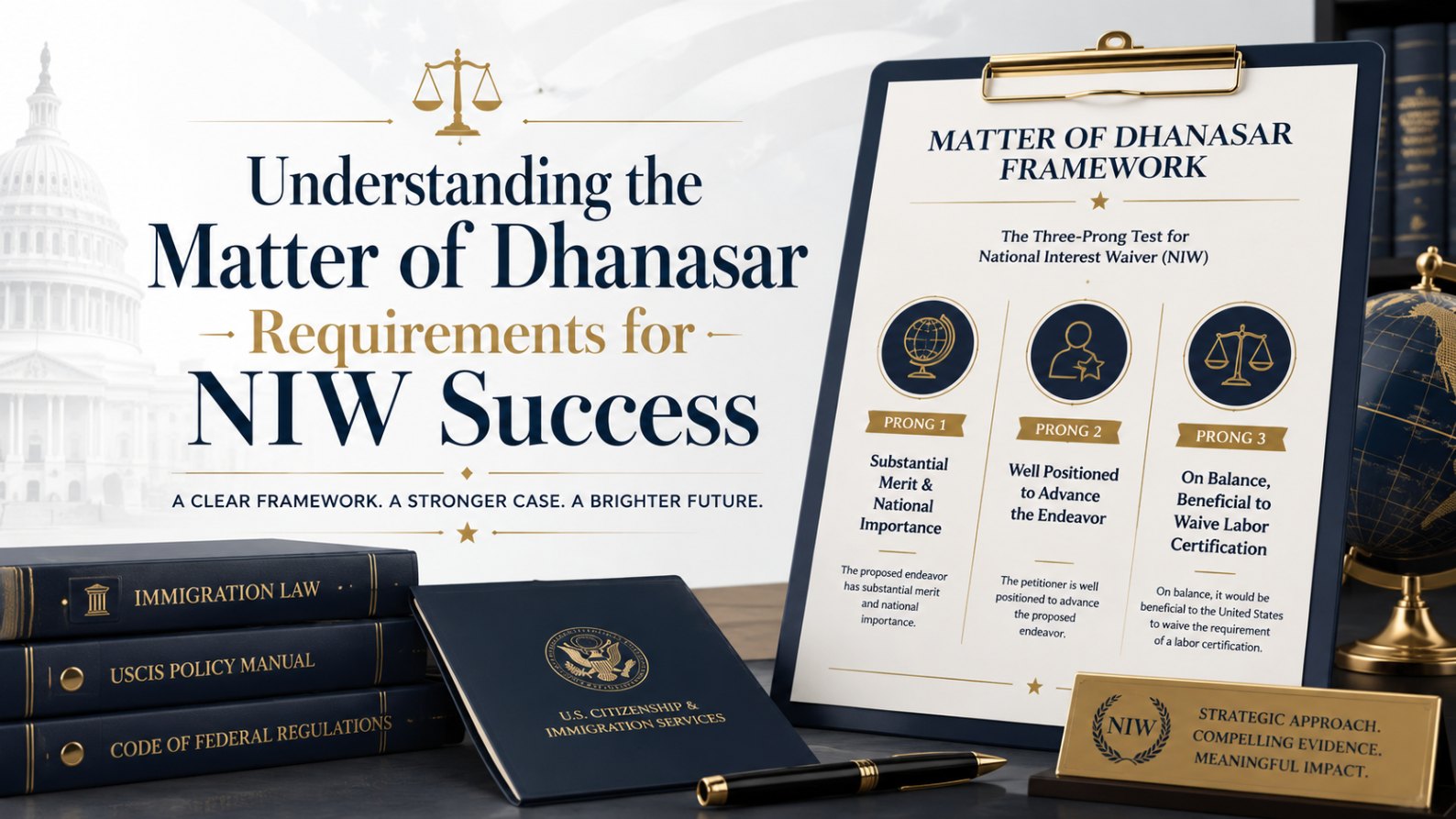
Before we talk about documents, you need to understand what USCIS is actually evaluating. The EB-2 NIW is judged under something called the Dhanasar framework, which has three parts:
- Your proposed work has substantial merit and national importance
- You're well-positioned to actually do this work
- It benefits the United States to let you skip the normal job offer requirement
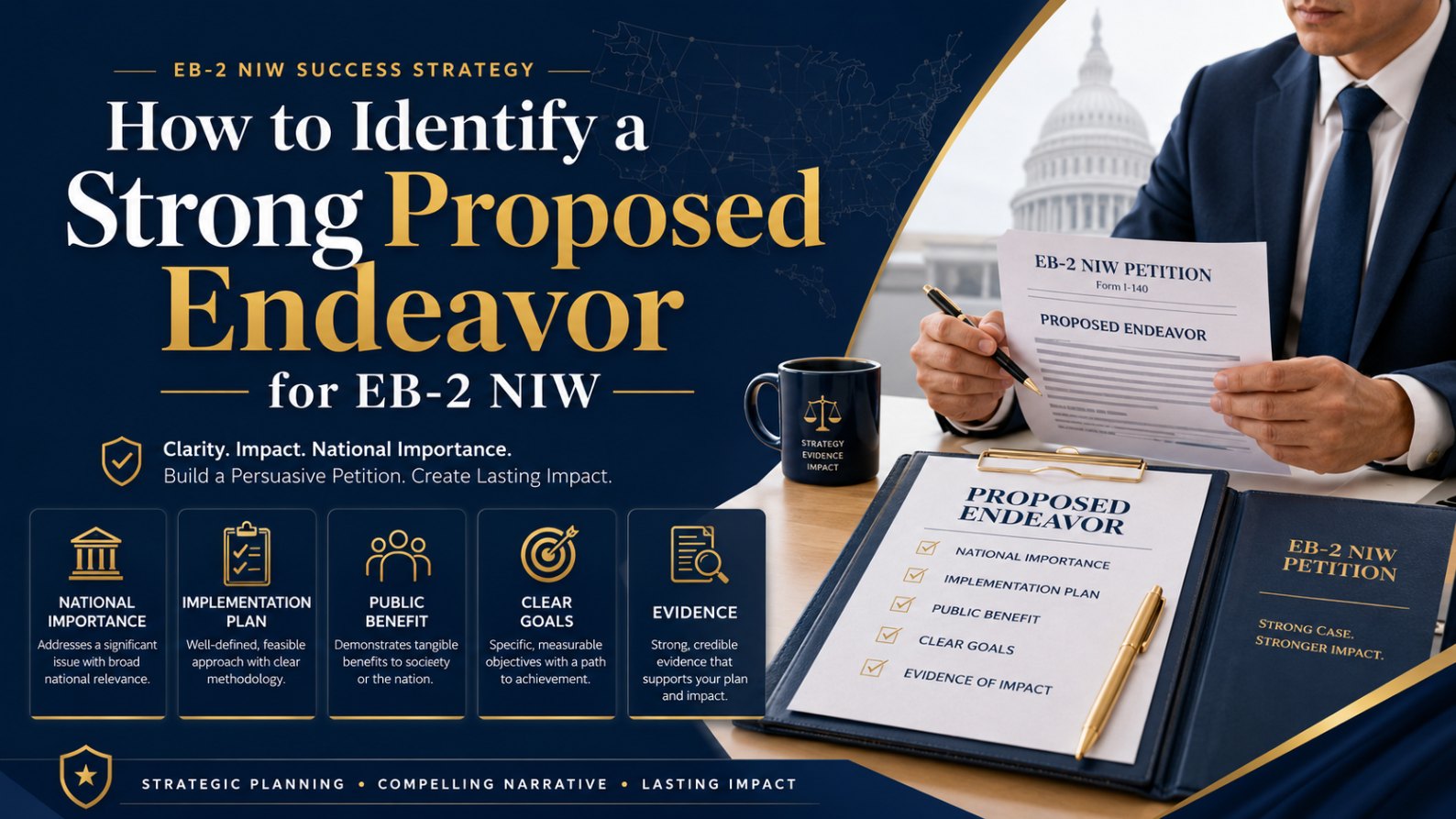
Every single document in your petition should address at least one of these three prongs. If a document doesn't clearly support one of these points, it's just taking up space.
Here's what that means in practice: USCIS doesn't care that you graduated with honors or won a departmental award in grad school. Those things are nice, but they don't prove any of the three prongs. What they care about is whether you're going to do something valuable in the United States and whether you have the track record to pull it off.
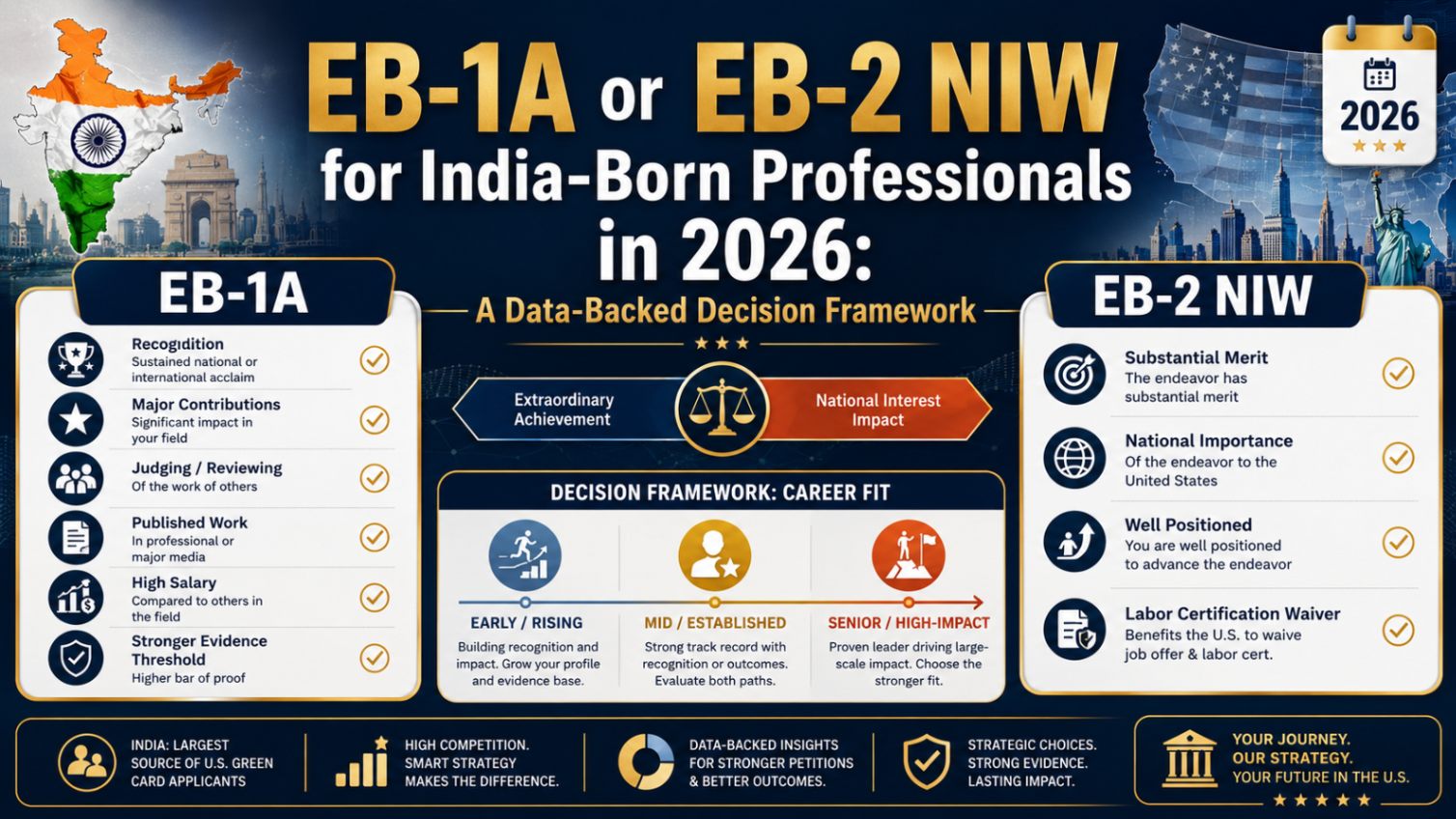
The standard is "preponderance of the evidence"—basically, your documents need to make it more likely than not that your claims are true. You're not trying to prove you're the best in the world (that's EB-1A). You're proving you have a valuable plan and the ability to execute it.
The Power of Recommendation Letters: Credibility Transfer
Here's something most people don't understand about recommendation letters: they're not just testimonials. They're credibility transfers.
When a recognized expert writes a letter supporting your petition, they're lending you their reputation. Think about it this way: if a VP of Engineering at Google says your machine learning framework is innovative and widely adopted, USCIS has to take that seriously. That VP has spent 20 years building credibility in the field. By attaching their name to your work, they're putting that credibility on the line.
I saw this work beautifully in a case last year. The applicant was a renewable energy engineer with a solid but not spectacular publication record. What made his case was a letter from a former U.S. Department of Energy official who wrote: "I've reviewed energy proposals for 15 years at DOE. [Applicant's] approach to grid-scale battery optimization is the most practical solution I've encountered for rural electrification challenges. If his methodology were implemented across Appalachian communities, we could reduce energy costs by an estimated 12-18% while improving grid reliability."
That letter did three things simultaneously:
- Established national importance (DOE official = government interest)
- Validated technical merit (expert judgment from someone who reviews hundreds of proposals)
- Transferred credibility (15 years of DOE experience backing this applicant's approach)
One letter. Three prongs. That's the power of the right recommender.
Independent vs. Dependent Letters: Why It Matters
There are two types of recommendation letters, and you need to understand the difference:
Dependent letters come from people who worked with you directly—your PhD advisor, your current boss, your co-founder, your former manager. These letters are useful for establishing what you actually did. They provide proof of work.
Independent letters come from people who know your work but have never employed you, taught you, or collaborated with you. They discovered your research, used your methodology, or implemented your technology—but they have no personal relationship with you.
Here's why independent letters matter so much: they prove influence beyond your immediate circle.
I worked with a computational biologist whose three independent letters came from:
- A research director at Pfizer who cited her published algorithm in two of his team's internal projects
- A professor at Johns Hopkins who assigned her paper as required reading in his graduate course
- A biotech startup founder who licensed her method and built a diagnostic tool around it
None of these people knew her personally. They found her work through publications and conferences. That's what USCIS wants to see—evidence that your work has spread beyond the people who are obligated to say nice things about you.
But here's the catch: most people can't get truly independent letters because their work hasn't had that kind of external impact yet. If that's your situation, don't fake it. A weak independent letter from someone who barely knows your work is worse than a strong dependent letter from your former CTO.
What Makes a Recommendation Letter Actually Useful
I've read thousands of recommendation letters. The vast majority are worthless. Here's what separates good letters from bad ones:
Bad letters sound like this: "I have known [Applicant] for three years and have been consistently impressed by their intelligence, dedication, and innovative thinking. They are one of the brightest minds in the field and would be an asset to any organization. I enthusiastically recommend them for permanent residency."
That letter says nothing. It's generic praise that could apply to anyone. USCIS adjudicators see hundreds of these and they know it's template language.
Good letters sound like this: "In March 2022, I implemented [Applicant's] compression algorithm (detailed in their 2021 IEEE paper) in our video streaming infrastructure at Netflix. Prior to implementation, our CDN costs for 4K streaming averaged $0.14 per GB delivered. After deploying their method, costs dropped to $0.09 per GB—a 36% reduction. At our scale (15 petabytes monthly), this translated to $2.1M in annual savings. The algorithm is now standard in our encoding pipeline across all regions."
See the difference? The second letter includes:
- Specific technical work (the 2021 IEEE paper)
- Exact implementation details (Netflix video streaming)
- Measurable outcomes ($2.1M annual savings)
- Current ongoing use (standard across all regions)
- Timeline (March 2022 implementation)
That's proof of work. That's credibility transfer. That's what wins cases.
The Credibility Hierarchy: Who Should Write Your Letters
Not all recommenders carry equal weight. USCIS adjudicators evaluate the credibility of the letter writer, not just the content of the letter.
Here's the hierarchy I've observed, from most impactful to least:
Tier 1: Government Officials and Industry Leaders
- Current or former federal agency officials (DOE, NIH, DARPA, FDA, etc.)
- C-suite executives at publicly traded companies
- Department heads at top-tier research institutions (Stanford, MIT, Johns Hopkins)
- Editors-in-chief of major journals in your field
Tier 2: Established Experts with Clear Credentials
- VPs or Directors at recognized companies
- Tenured professors at major universities
- Founders of well-funded startups ($10M+ raised)
- Named inventors on widely-licensed patents
Tier 3: Credible but Less Impactful
- Senior engineers or scientists at known companies
- Assistant professors at research universities
- Directors at smaller but legitimate organizations
Tier 4: Minimal Impact
- Your former PhD advisor (unless they're exceptionally prominent)
- Your current manager (conflict of interest)
- Colleagues at your level
- People at unknown organizations
This doesn't mean Tier 4 letters are useless—they can provide valuable proof of work. But if all five of your letters come from Tier 4 recommenders, you're not demonstrating the kind of influence that justifies waiving labor certification.
I had a client whose entire case rested on one letter from a former DARPA program manager. That single Tier 1 letter outweighed everything else in the petition because it came from someone whose job was literally to identify breakthrough technologies for the U.S. government.
Proof of Work: What Your Letters Need to Document
Beyond credibility transfer, recommendation letters serve a critical practical function: they provide proof of work that's otherwise hard to document.
This is especially important if you work in industry rather than academia. Academic researchers have publications, citations, and conference presentations. But what if you're a software engineer who built proprietary systems? Or a product manager who drove strategy at a private company? Your most impressive work might be locked behind NDAs and corporate confidentiality.
That's where recommendation letters become essential. Your former CTO or VP of Engineering can write a letter that reveals (with company approval) what you actually built and the impact it had.
What Proof of Work Actually Looks Like
I worked with a machine learning engineer at a Series C fintech startup. His work was completely proprietary—no publications, no open-source contributions, everything behind corporate firewalls. But his VP of Engineering wrote a letter that included:
"[Applicant] designed and implemented our fraud detection system from the ground up. When he joined in January 2021, our false positive rate for transaction blocks was 8.2%, causing significant customer friction and an estimated $400K in monthly lost revenue from abandoned transactions. He developed a novel ensemble learning approach combining transformer-based models with traditional rule-based systems. By July 2022, the false positive rate had dropped to 1.1% while maintaining a 99.7% true positive rate for actual fraud. This directly enabled our Series C fundraise—our lead investor specifically cited fraud prevention metrics during diligence. The system now processes 2.3M transactions daily and has prevented an estimated $12M in fraud losses since deployment."
That letter accomplished something critical: it made proprietary work visible to USCIS. Without it, the applicant couldn't prove what he'd built or why it mattered.
Technical Details Matter More Than You Think
Here's a mistake I see constantly: applicants ask their recommenders to keep letters "high-level" because they worry USCIS adjudicators won't understand technical details.
This is exactly backwards.
USCIS has subject matter experts who review petitions in specialized fields. If you're a machine learning engineer, your petition will likely be reviewed by an officer with some ML background or access to technical consultants. They want to see technical depth because it proves the recommender actually understands your work.
Compare these two statements:
Vague: "[Applicant] made significant contributions to our cloud infrastructure that improved performance and reduced costs."
Specific: "[Applicant] implemented a Kubernetes-based autoscaling system that reduced our AWS EC2 costs from $47K to $31K monthly while improving p99 latency from 340ms to 180ms under peak load. His custom scheduler algorithm (detailed in his GitHub repository) is now used across our entire production environment, serving 12M daily active users."
The second version proves the recommender knows exactly what was built and how it works. It also gives USCIS concrete metrics to evaluate.
Publications and Citations: Context Is Everything
For researchers, publications and citations are standard supporting documents. But here's what most people get wrong: USCIS adjudicators don't automatically understand what a citation means.
You need to explain the context. A paper with 150 citations sounds impressive, but USCIS doesn't know if that's exceptional or average for your field. You need to provide that context.
How to Present Citation Evidence
I had a client—a materials scientist—with 89 citations on her most important paper. That didn't sound like much compared to highly-cited papers in biology or medicine that can hit thousands of citations. But in her specialized subfield (high-temperature ceramics for aerospace applications), 89 citations in 3 years was extraordinary.
We included a letter from a journal editor explaining: "In the field of aerospace materials science, papers rarely exceed 50 citations within 5 years of publication due to the highly specialized nature of the research and the small community of experts. Dr. [Applicant's] paper achieving 89 citations in 36 months places it in approximately the top 2% of publications in this domain over the past decade."
That context transformed the citation count from "decent" to "exceptional."
Citation Quality vs. Quantity
Not all citations are equal. USCIS looks at who is citing your work and how they're using it.
Self-citations (you citing your own papers) don't count. Citations in passing (your work mentioned in a literature review but not actually used) carry minimal weight. What matters are citations where other researchers built upon your methodology, used your data, or extended your findings.
In a recent biomedical case, the applicant had 45 citations. We included a supplemental document analyzing those citations:
- 12 were from researchers who replicated her experimental protocol
- 8 were from papers that used her published dataset
- 6 were from clinical studies that applied her findings to patient care
- 4 were from companies that cited her work in patent applications
That analysis showed that 30 of her 45 citations represented actual implementation and building upon her work—not just acknowledgment. That's what USCIS wants to see.
Business Plans and Statements of Proposed Endeavor
This is the foundation document that dictates what everything else needs to prove. If your proposed endeavor is too vague, your entire petition collapses.
I see this mistake constantly: applicants write statements like "I will conduct research in artificial intelligence to benefit the U.S. economy and advance technological innovation."
That's completely useless. It's so broad that USCIS can't evaluate it. What research? What specific problem? What's the timeline? Who benefits?
What a Strong Proposed Endeavor Looks Like
Here's an example from a successful petition I worked on:
"I will develop and deploy a machine learning-based early warning system for hospital-acquired infections in rural U.S. healthcare facilities. This system will integrate with existing electronic health record (EHR) platforms to analyze patient vital signs, laboratory results, and medication data in real-time, predicting infection risk 24-48 hours before clinical symptoms appear. My target deployment is 15-20 rural hospitals in Appalachia and the Upper Midwest within the first 3 years, focusing on facilities with limited infectious disease specialist access. Based on published infection rates, this system could prevent an estimated 2,000-3,000 hospital-acquired infections annually once fully deployed, reducing mortality and saving approximately $15-20M in treatment costs per year."
See the difference? This statement is:
- Specific (machine learning for hospital infections, not just "AI for healthcare")
- Targeted (rural hospitals in specific regions)
- Measurable (15-20 hospitals, 2,000-3,000 infections prevented)
- Timeline-bound (3-year deployment plan)
- Impact-quantified ($15-20M in savings)
Once you have a specific proposed endeavor, every other document becomes focused. Your recommendation letters need to explain why you're qualified to build this specific system. Your publications need to demonstrate relevant expertise in machine learning and clinical applications. Your credentials need to show you understand both the technical and healthcare domains.
For Startup Founders: The Business Plan
If you're an entrepreneur, your proposed endeavor is building and scaling your company. That means you need a business plan that proves both merit and feasibility.
USCIS wants to see:
- Market analysis (Who needs this? How big is the market?)
- Technical approach (What are you building? What's innovative about it?)
- Traction (Current customers, revenue, partnerships)
- Growth plan (Hiring timeline, expansion strategy)
- U.S. benefit (Job creation, economic impact, technological advancement)
I worked with a founder whose startup had developed a water purification technology for developing markets. His business plan included:
- Letters of intent from three municipal water authorities in the U.S. Southwest
- A partnership agreement with a major engineering firm for deployment
- Financial projections showing 40-50 U.S. jobs within 3 years
- Independent analysis from a water quality expert at UC Berkeley validating the technology
- Proof of $2.8M in venture funding from U.S. investors
That business plan proved all three Dhanasar prongs simultaneously. It wasn't generic—it was a specific, funded, actively-progressing venture with measurable U.S. benefits.
Government Grants and Funding: The Golden Ticket
If you've received government funding—especially from U.S. agencies—that's some of the strongest evidence you can include.
Why? Because a government agency already evaluated your work and decided it was worth funding. USCIS gives significant weight to this because it's independent validation of both merit and national importance.
What Counts as Strong Funding Evidence
Tier 1 (Extremely Strong):
- NIH R01 grants
- NSF CAREER awards
- DARPA contracts
- DOE research grants
- NASA research funding
Tier 2 (Strong):
- NIH R21 or R03 grants
- NSF standard grants
- State-level research funding (especially from California, Massachusetts, New York)
- SBIR/STTR Phase II awards
Tier 3 (Helpful but not decisive):
- SBIR/STTR Phase I awards
- Small university internal grants
- Industry research funding
A postdoc with an NIH R01 grant has basically cleared the "well-positioned" prong automatically. Those grants go through intense peer review—acceptance rates are often under 20%. If NIH gave you $1.5M to pursue your research, USCIS takes that very seriously.
Private Funding Can Work Too (If It's Significant)
For entrepreneurs, venture capital funding serves a similar function. But it needs to be substantial and from credible investors.
Raising $100K from friends and family doesn't prove much. Raising $5M from Sequoia or Andreessen Horowitz proves you've convinced some of the most sophisticated investors in the world that your company has potential.
I worked with a founder who'd raised $8M in Series A funding. We included:
- The term sheet showing the valuation and investor names
- A letter from the lead investor explaining their due diligence process and why they invested
- The investor deck with market analysis and traction metrics
- Press coverage of the funding round in TechCrunch and The Information
That funding round proved multiple things:
- Third-party validation of the business model (investors did extensive diligence)
- U.S. benefit (investors were U.S.-based, jobs would be created in the U.S.)
- Positioning (if he could convince top VCs, he could execute the business plan)
What NOT to Include: Documents That Hurt Your Case
Just as important as knowing what to include is knowing what to leave out. I've seen petitions damaged by including too much irrelevant material.
Don't include:
- Undergraduate transcripts (unless you're fresh out of school with no work experience)
- Generic awards (Dean's List, departmental honors, scholarships)
- Every publication you've ever co-authored (focus on your most impactful work)
- Certificates from online courses (Coursera certificates don't prove extraordinary ability)
- Membership cards from professional organizations (IEEE membership means you paid a fee)
- Generic letters from people who barely know you (worse than no letter)
I recently reviewed a petition that included 47 documents totaling 380 pages. At least 200 pages were completely irrelevant—undergraduate awards, conference attendance certificates, coursework syllabi. The adjudicator had to wade through all of that to find the 10-15 documents that actually mattered.
Contrast that with a petition I helped prepare that had 18 documents totaling 95 pages. Every single document served a specific purpose mapped to a Dhanasar prong. That petition was approved in 4 months without an RFE.
Less is more—if each document is high quality.
How to Organize Your Supporting Documents
Organization matters more than people realize. USCIS adjudicators review dozens of petitions per week. Making their job easier makes approval more likely.
Here's the structure I recommend:
Section 1: Proposed Endeavor
- Statement of proposed endeavor or business plan
- Any supporting market analysis or independent validation
Section 2: Proof of Qualification (Dhanasar Prong 2)
- Your CV
- Degree certificates and transcripts (if relevant)
- Employment verification letters
- Your most important publications (3-5 maximum)
- Citation analysis with context
- Patents or intellectual property (if applicable)
Section 3: Recommendation Letters
- Independent letters first (if you have them)
- Dependent letters second
- Each letter should be introduced with a one-paragraph summary explaining who the recommender is and what the letter proves
Section 4: Evidence of Impact
- Media coverage (if significant)
- Awards (if truly prestigious)
- Speaking engagements (if at major venues)
- Commercial implementation of your work
- Anything else that proves your work has been recognized or adopted
Section 5: Proof of U.S. Benefit (Dhanasar Prong 3)
- Government grants or funding
- U.S.-based employment or company formation
- Letters explaining how your work benefits the U.S. specifically
- Economic impact analysis (for founders)
Each section should have a brief cover page explaining what's in that section and how it supports your petition. Don't make the adjudicator guess why you included something.
The Letter of Intent vs. Petition: A Critical Distinction
Here's something many applicants don't realize: USCIS evaluates what you plan to do in the future, not just what you've done in the past.
The EB-2 NIW asks: "Should we waive the job offer requirement because your proposed work benefits the U.S.?" That means your supporting documents need to prove both past achievements and future plans.
This is why the proposed endeavor statement is so critical. It's the bridge between "here's what I've accomplished" and "here's what I'll do in the U.S."
Your recommendation letters should reinforce this forward-looking element. The best letters include statements like:
"Based on [Applicant's] track record developing X technology, I am confident they are well-positioned to advance Y initiative in the U.S. market. Their proposed approach addresses a critical gap that our industry has struggled with for years."
That sentence does two things: validates past work and endorses future plans.
Final Thoughts: Quality Over Quantity, Strategy Over Volume
After reviewing hundreds of EB-2 NIW petitions, I can tell you the pattern that predicts success: strategic, well-explained supporting documents that directly address the Dhanasar framework.
The weakest petitions try to overwhelm USCIS with volume—50 documents, 400 pages, everything the applicant has ever done. The strongest petitions are focused—15-20 carefully selected documents, each with a clear purpose, each explained in context.
Remember what supporting documents actually do:
- Transfer credibility from established experts to you
- Provide proof of work that's otherwise hard to document
- Demonstrate impact through specific, measurable outcomes
- Validate your proposed endeavor with independent expert support
If a document doesn't accomplish at least one of these goals, don't include it.
And understand that the person writing the recommendation letter is putting their professional reputation behind you. That's not something to take lightly. When you ask a VP or a professor or a government official to write a letter, you're asking them to stake their credibility on your abilities. Make sure the letter lives up to that responsibility by being specific, factual, and genuinely reflective of your impact.
That's what wins EB-2 NIW cases. Not volume. Not generic praise. Strategic, credible evidence that proves you have a valuable plan and the ability to execute it.
Get Immigration Insights Delivered to Your Inbox
Practical guidance on EB-1A, EB-2 NIW, O-1A, and U.S. immigration — no spam, unsubscribe anytime.