
An immigration petition for high-skill visas requires a blend of legal strategy and technical narrative. This guide explains why specialists are used to draft these complex documents.
How Immigration Attorneys Work With Specialist Petition Drafters — and What to Look For
An EB-1A or NIW petition is two things simultaneously: a legal filing that has to satisfy specific regulatory standards, and a technical document that has to explain complex professional achievements to someone who almost certainly doesn't share the applicant's professional background. Most successful filings are built by a team rather than a single person, with a licensed immigration attorney handling the legal strategy and a specialist petition drafter handling the evidentiary narrative. Understanding how that collaboration works — and what distinguishes a functional version of it from a dysfunctional one — matters before signing a retainer.
How the Division of Labor Actually Works
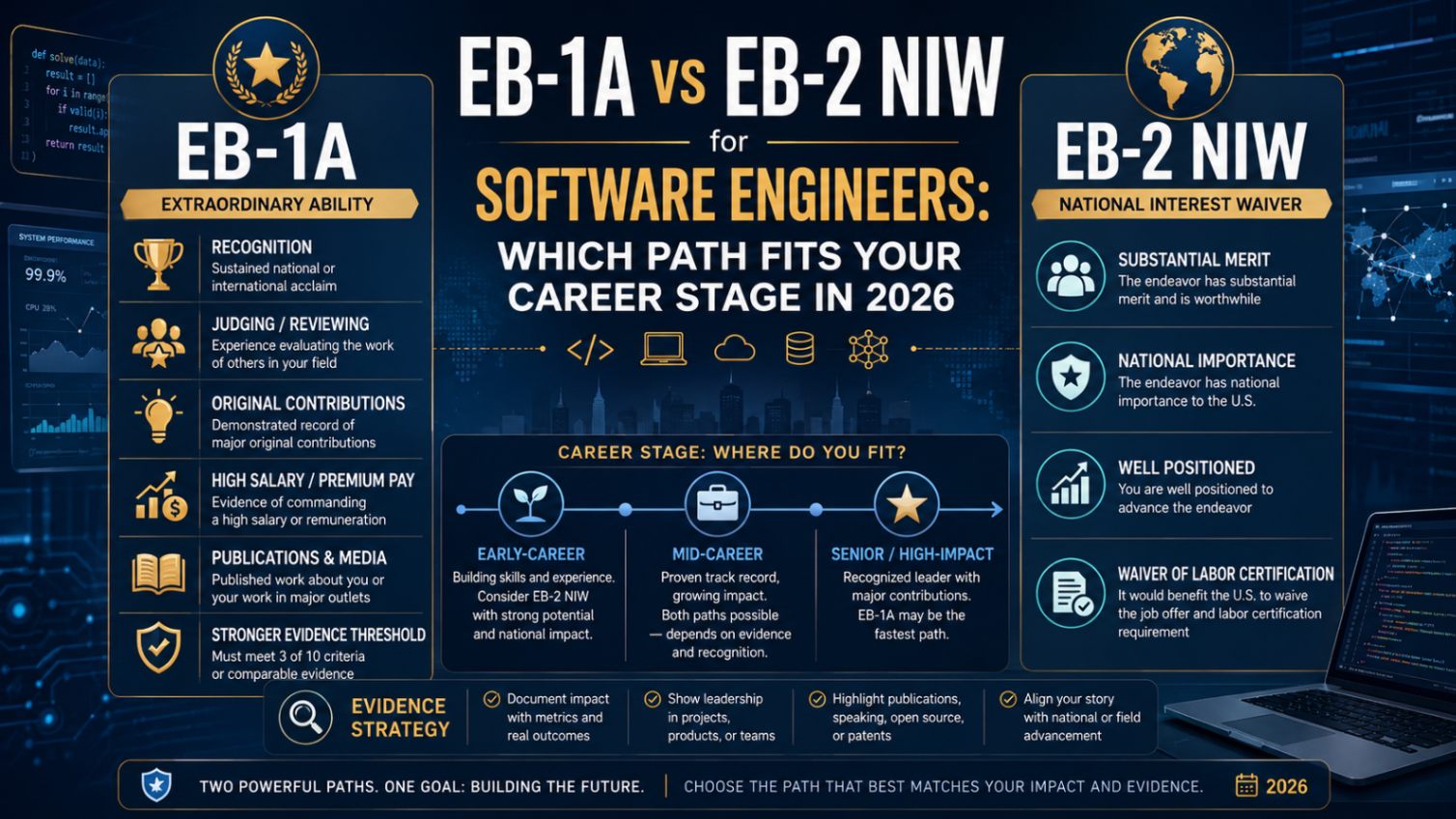
The attorney's role is to ensure the filing complies with the Immigration and Nationality Act, maintain communication with USCIS, and provide the legal framework for the case — including the strategy for which criteria to claim and how to handle the Kazarian two-step analysis that governs EB-1A adjudications. Legal compliance, RFE response strategy, and the decision to appeal or refile are squarely within the attorney's domain.
The petition drafter's role is to convert raw evidence — citation records, performance evaluations, media coverage, expert letters, patent filings — into a cover letter that explains what that evidence means in terms a generalist adjudicator can evaluate. For a quantum physicist, that means explaining why publication in Physical Review Letters carries different weight than publication in a lower-impact journal, and why a specific citation pattern reflects field-level influence rather than ordinary academic productivity. For a software engineer, it means translating a distributed caching architecture into a business impact statement that doesn't require domain expertise to evaluate.
The practical reason law firms use specialist drafters rather than relying entirely on internal staff is quality at the technical level. A generalist paralegal can handle procedural filing requirements without difficulty. They often cannot write persuasively about why a specific algorithm represents an original contribution of major significance to the field — because doing that well requires understanding what "major significance" actually looks like in that discipline. A drafter with relevant technical background or deep experience in a specific field type can spend 30 to 40 hours on a single petition, mapping every exhibit to a criterion and building a coherent narrative across a 40-to-70-page cover letter. That level of detail is what the Kazarian final merits determination actually requires.
Comparison: Drafting Approaches
| Feature | Internal Law Firm Paralegal | Specialist Petition Drafter | Self-Filed (Pro Se) |
|---|---|---|---|
| Technical depth | Moderate | High | High — but lacks legal context |
| Legal compliance | High | High (supervised by attorney) | Variable |
| Criterion-to-exhibit mapping | Standard | Tailored and exhaustive | Depends on applicant's understanding |
| RFE risk | Moderate | Lower | Higher |
| Drafting timeline | 4–8 weeks | 2–4 weeks | 3–6 months |
What to Look for When Evaluating a Drafting Team
Field-specific experience. Ask whether the drafter has handled cases in your specific industry. The evidence strategy for a computational biologist differs from the strategy for a fintech engineer, which differs again from the strategy for a performing arts professional. The criteria are the same; what "major significance" looks like — and how to document it — varies considerably. A drafter who primarily handles one category of applicant may not recognize the evidentiary conventions of another.
Avoidance of template language. Officers reviewing thousands of petitions annually recognize boilerplate. When only the applicant's name and project title have been changed between petitions, the letter reads like a template because it is one. A drafter building from the applicant's actual CV, Google Scholar profile, and specific professional record produces a different document than one assembling generic paragraphs around variable fields. The practical consequence: templated petitions tend to generate templated RFEs, where the officer uses formulaic skepticism that mirrors the formulaic petition. Neither produces a good outcome.
Evidence mapping logic. A professional drafter can explain, specifically, how each piece of evidence supports each criterion being claimed. If the cover letter asserts 500 citations but the exhibit shows 450, an officer may treat the discrepancy as a credibility issue rather than a clerical error. If the letter claims a critical role but the only supporting document is a standard HR employment verification letter, the criterion will fail. The mapping between claim and evidence has to be exact and explicit — every assertion in the letter should direct the officer to a specific exhibit page.
Distinct expert letters. Expert letters drafted using a shared template — identifiable by similar structure, similar phrasing, and similar levels of generality across different recommenders — carry reduced weight. USCIS officers are specifically instructed to give less evidentiary value to letters that appear coordinated rather than independently authored. A specialist drafter writes different letters for different recommenders, grounded in each recommender's specific relationship to the applicant's work, what they personally observed or used, and the specific outcome they can attest to.
Red Flags in the Drafting Process
A drafter who requests only a CV and delivers a finished petition within three days without asking for underlying data, expert contact lists, or technical background materials is almost certainly working from a template or using generative AI output without meaningful customization. Neither produces a petition that survives the Kazarian final merits determination, because that determination requires the kind of field-specific context that doesn't exist in a CV.
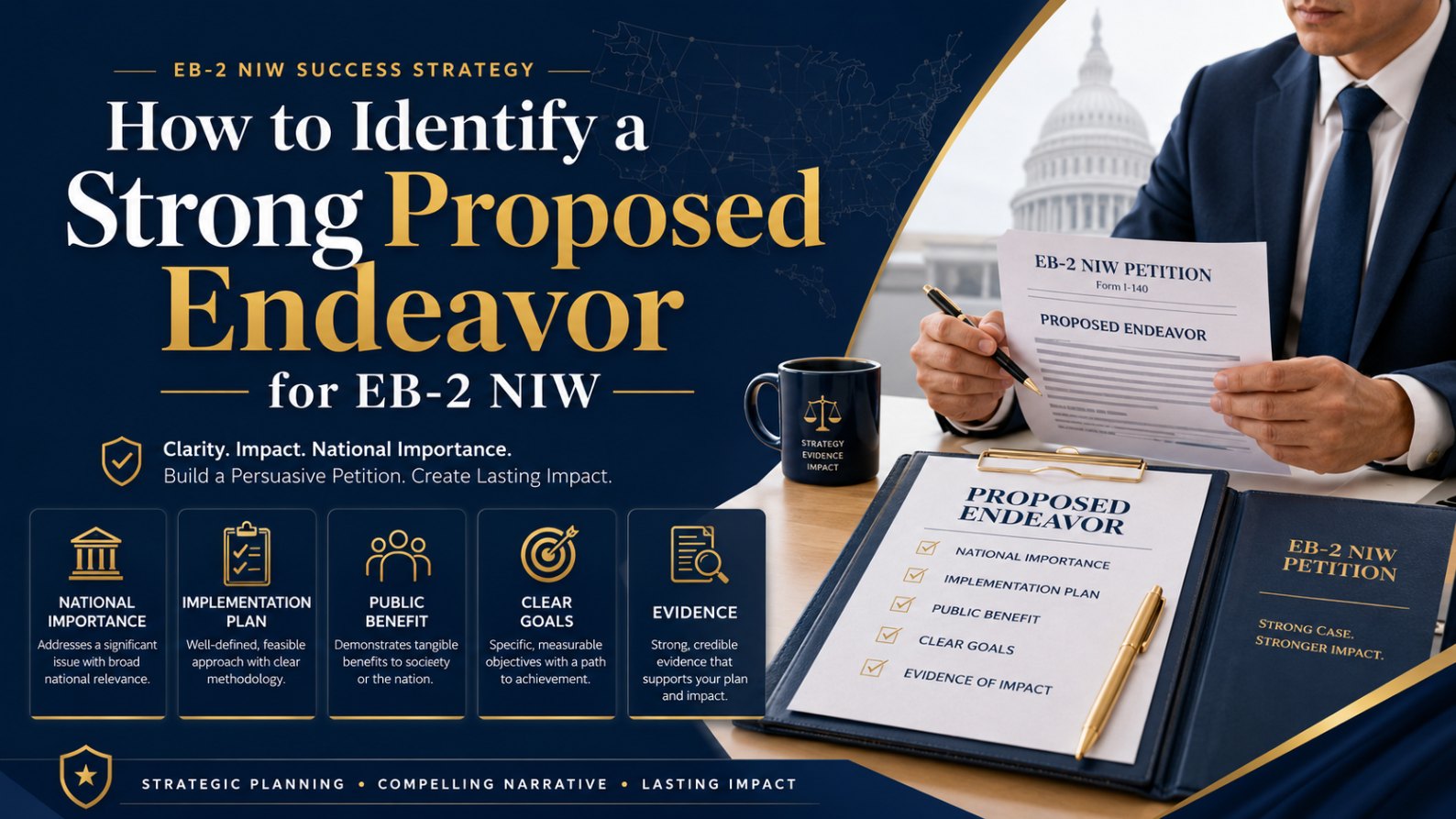
Absence of any Prong One or prospective benefit analysis in an NIW petition is a structural failure, not a stylistic one. The Dhanasar framework requires a forward-looking argument — what the applicant will do in the United States and why that work serves a national interest that extends beyond their employer. A drafter who builds the entire petition around past achievements without articulating a proposed endeavor has left the most important section of an NIW petition empty.
Finally, be attentive to how a drafter handles evidence that doesn't fit cleanly into a criterion. A drafter whose response to an awkward credential is to force it into a category where it doesn't fit — claiming a standard industry certification as a nationally recognized award, for instance — is creating a credibility problem, not solving one. The honest assessment of what the evidence actually supports is more valuable than a padded criteria count that doesn't hold up under scrutiny.
Licensing, Oversight, and the Limits of a Drafter's Role
Petition drafters are not immigration attorneys and cannot practice law. The attorney supervises the case, reviews the final draft for legal compliance and strategic soundness, signs the G-28 Notice of Entry of Appearance, and takes legal responsibility for the filing. If a drafter offers to file a petition on behalf of an applicant without attorney oversight, they are engaged in unauthorized practice of law — a situation that puts the applicant's entire immigration history at risk and has no upside.
The applicant's own review of the petition before filing is essential regardless of who drafted it. The drafter handles the narrative; the applicant is the subject matter expert on their own career. A technical description that misrepresents the applicant's role in a project — even unintentionally, through misunderstanding — can be treated by USCIS as material misrepresentation, which carries permanent consequences for admissibility. If something in the draft is incorrect or overstated, the applicant has both the standing and the obligation to say so before the petition leaves the office.
Frequently Asked Questions
Does an immigration petition have to be written by a licensed attorney? The attorney must supervise the legal strategy and is responsible for the filing. The actual drafting of the narrative — the cover letter, the expert letter frameworks, the exhibit organization — can be performed by a specialist drafter or technical writer working under attorney oversight. Most firms using this model build the drafter's work into the overall engagement rather than billing it separately. The attorney's role is legal compliance and strategy; the drafter's role is technical accuracy and evidentiary narrative.
How long does a high-quality petition take to draft? A well-constructed EB-1A or NIW petition typically takes three to six weeks from initial evidence review to final assembly. That timeline includes gathering and organizing exhibits, drafting and revising the cover letter, coordinating expert letters, and verifying the exhibit-to-criterion mapping. Petitions assembled in days rather than weeks usually reflect compressed evidence review that misses the field-specific context a final merits determination requires.
Can an applicant hire a drafter independently if they already have an attorney? Yes, though it requires clear coordination between the three parties. The drafter produces the technical narrative; the attorney reviews it for legal compliance and strategic fit; the applicant reviews it for factual accuracy. If the attorney and drafter are working without regular communication, the risk is inconsistency between the legal argument and the technical content. That inconsistency tends to show up in the cover letter — where the legal framing and the technical description of the work pull in slightly different directions — and officers notice it.
How many revision rounds should be standard? At minimum, two. The first allows the applicant to correct technical inaccuracies in how their work has been described. The second refines the narrative and verifies the evidence mapping. A firm that delivers a petition and declines to allow applicant review and revision is not operating at a standard that reflects the stakes of the filing. The applicant's corrections are not optional polish — they're necessary quality control on the one area the drafter cannot self-verify.
What does a drafter do when an RFE is issued? Because the drafter built the original narrative, they understand both what arguments were made and what evidence was submitted. When USCIS issues an RFE, the drafter works with the attorney to identify whether the officer's concern reflects missing evidence, evidence that was overlooked, or a legal standard that was misapplied — and to address each point directly. RFE responses that treat the officer's concern as a bureaucratic obstacle to overcome, rather than a specific question to answer, tend to perform poorly.
The question worth asking before engaging any team is who specifically will draft the petition — not which firm is handling the case. Understanding the drafter's background, their approach to evidence mapping, and how they've handled cases in the applicant's specific field is a better predictor of petition quality than any other variable in the process.
A VangaVault profile assessment reviews the existing record against both EB-1A and NIW standards and returns a written gap analysis within 48 hours, identifying which criteria are currently supportable and what the evidentiary foundation for a petition would require. Schedule a consultation to start that evaluation.
Get Immigration Insights Delivered to Your Inbox
Practical guidance on EB-1A, EB-2 NIW, O-1A, and U.S. immigration — no spam, unsubscribe anytime.